Start with one pair of pants and one sentence: “I want this outfit to feel relaxed, but ready for lunch outside the house.” That is a more useful beginning than trying to copy every detail of a photograph. It gives you a reason to choose a top, decide how much structure to add and reject accessories that make the outfit harder to wear.
Palazzo styling becomes simpler when you make a few connected decisions rather than searching for a rule about your height or age. Use the broad legs as part of the composition, then adjust the outfit until it suits your plans and your preferences.
Shopping starting points
As an Amazon Associate I earn from qualifying purchases. Purchases take place on Amazon.
These are editorial shopping starting points based on listed details, not hands-on tests. Budget and Premium describe relative asking-price tiers among the featured options when researched; they do not establish product quality. Confirm the selected size, composition and current price on Amazon. How we choose examples.
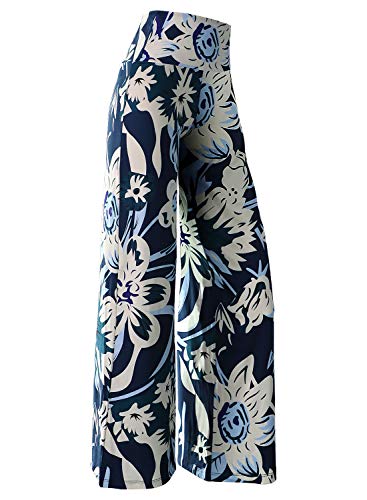
Linked Amazon product image. See the exact listing for garment details.
Give the outfit a purpose before adding pieces
Describe the day in practical terms. You might need to walk to a café, sit at a desk, attend a dinner or move between warm outdoor air and a cooler room. Write down the one or two requirements that affect clothing most: walking comfort, coverage, a dress expectation or room for a layer. Those requirements become your filters.
Then choose a style direction you enjoy. Relaxed, tailored, playful and understated are useful descriptions because they guide decisions without claiming there is one correct look. A flowing printed pant can support a quiet outfit if the other pieces are simple. A plain black pair can support a more expressive outfit through color or texture elsewhere.
Keep this initial direction loose enough to adapt. You are building clothing for a real day, not passing a test. If the proposed outfit needs constant adjusting or footwear you dislike, change the plan before buying more pieces to defend it.
Read the pants you own, not just the product name
Look at the waistband height, how the fabric leaves the hip and how much width reaches the hem. Compare the standing shape with the moving shape. A soft fabric may fall close while still offering a broad leg; a more structured version can hold its volume even when you are still.
Retail language overlaps, so a listing called palazzo may be cropped, tailored or simply wide-legged. Use the silhouette guide and the wide-leg comparison if terminology is making the purchase confusing. Styling advice is most useful when it responds to the actual garment rather than treating every broad trouser as identical.
Before solving an outfit problem, make sure the pants themselves are comfortable. A waistband that slips or a rise that restricts sitting will not be corrected by a different necklace. Address fit separately, then return to the enjoyable decisions about color and shape.
Choose where the outfit changes shape
The point where the top meets the pants is one of the clearest styling choices. You can reveal the waistband, allow the top to overlap it, or wear a longer layer that creates another line farther down. Each arrangement can be intentional. The aim is to choose it, not to obey a rule that all volume below must be balanced by tightness above.
Try three options using clothes you already have. Compare a top ending near the waistband, a relaxed top ending below it and a longer open layer over a simpler base. Look from the side as well as the front. Notice which arrangement gives the silhouette you want without tugging at the fabric.
If the top selection remains the sticking point, see tops to wear with palazzo pants. If the top is right but its fabric bunches at the waist, the separate tucking guide covers that technique. Keep those detailed tasks distinct from the overall outfit decision.
Use a small set of connections
Starting direction
Connection to try
Detail to edit
Quiet everyday outfit
Repeat one neutral across top and pants
Remove an accessory that adds an unrelated color
Printed-pants outfit
Echo one visible print color near the face
Avoid matching every minor print shade
Dressier separate pieces
Choose compatible levels of sheen and structure
Check whether one piece looks much more casual
Relaxed layered outfit
Repeat a texture or color in two places
Reduce competing hems if the outline feels busy
A connection does not require a matching set. An ivory top can relate to a small ivory detail in patterned trousers; a textured bag can echo the relaxed character of a matte fabric. These are suggestions for visual coherence, not laws about which colors can coexist.
If you enjoy contrast, make that the decision. A bright top with dark pants can be the focal point, while simple accessories leave room for it. If you prefer a tonal outfit, examine texture so neighboring shades do not need to match perfectly to look considered. For deeper examples, visit the black outfit guide or printed outfit guide.
Build one outfit in three levels of intention
Imagine a plain, flowing black palazzo you already own. For a casual starting point, try a familiar knit top and comfortable everyday shoes that clear the hem. Keep the combination simple enough to evaluate the pants without several new elements competing for attention.
For a more composed version, change one element: perhaps a top with a cleaner edge, a more structured bag or a deliberate tonal layer. Keep the comfortable foundation. You do not need to replace the entire outfit to make it feel more considered, and adding formal pieces indiscriminately can make the result harder to interpret.
For an evening direction, consider richer texture or a clearer focal point while checking the actual event expectations. That is a styling experiment, not a guarantee of dress-code suitability. Use the evening guide for detailed event decisions. The useful exercise here is seeing how one pair changes through a controlled adjustment rather than requiring three completely separate wardrobes.
Make footwear part of the silhouette check
Choose the shoes you want to wear for the day's activities, then check how the pants meet them. A hem that works with one heel height may not work with another. Neither the word palazzo nor a model photograph establishes where the hem will sit on you.
Walk, turn and sit in the complete combination. Look for fabric collecting under a heel, brushing the floor or catching on a shoe detail. If the length is wrong, use the hem-clearance guide before committing to that outfit. For choosing among footwear shapes, visit the shoe guide.
Heels are an option, not an entry requirement. A pair intended for flat shoes should be evaluated with flat shoes. The useful styling question is whether the lower edge looks deliberate and moves comfortably, rather than whether you have satisfied an imagined minimum height.
Check the outfit in motion and ordinary light
A mirror pose can conceal practical issues. Sit at a normal chair height, reach forward, walk several steps and return to standing without rearranging the clothes. Notice which parts stay where you want them and which demand attention. If a long top catches on the waistband or a layer continually swings into the front, decide whether that behavior suits the day.
Check the fabric in light similar to where you will wear it. If opacity is uncertain, use the underlayer guide to assess it. A strong color combination does not compensate for coverage you are uncomfortable with, and changing the entire outfit may be unnecessary when one layer solves the practical issue.
Take a photograph only if it helps you compare versions. Keep the angle and stance similar so you are assessing the clothes rather than camera differences. Your comfort and your view of the actual outfit matter more than reproducing a flattering pose from a retailer.
Are palazzo pants still in style?
They remain a current retail option, but availability is different from proof that a style dominates every trend. At the September 2026 research check, this catalog contained multiple palazzo model families. Long Tall Sally's March 2026 styling feature also presents the broader wide-leg category in current outfits. That supports continued styling relevance, not a claim about sales growth or universal popularity.
A useful way to make a pair feel current to your wardrobe is to combine it with pieces you already choose now. If you enjoy simple tops and practical shoes, start there. If you prefer dramatic layers or bold color, use those deliberately. There is no need to abandon a comfortable silhouette because a different trouser shape appears in another collection.
The ANRABESS smocked-waist palazzo offers a relaxed waistband-led example, while the Lands' End Starfish high-rise palazzo is another named model family to compare. Their retrieved titles support these descriptions; they do not make either a universally flattering or trend-leading choice.
Edit before you shop again
If the outfit feels unresolved, remove one item before adding another. Try less jewelry, a simpler bag or one fewer layer. Then identify the actual gap. You may need a top of a different length, not another pair of pants; you may need a hem adjustment, not higher shoes.
Once you have a combination you like, record why it works for you. A note such as “soft overlap, two colors, no waist adjustment when sitting” is more reusable than “nice outfit.” It gives your next purchase a clear job and helps you judge whether a new item belongs in your wardrobe.
Use the full palazzo collection to compare silhouettes when you know what is missing. If you want to plan several interchangeable outfits rather than solve one look, move to the capsule-wardrobe guide. A single successful outfit is the foundation; building a whole inventory is a separate task.
Frequently asked questions
Do I have to wear a fitted top with palazzo pants?
No. A close top is one option, but relaxed overlap and longer layers can also be intentional. Compare the meeting point of top and pants, the side view and how the outfit behaves when you move.
Can I wear palazzo pants without heels?
Yes, if the pants work with the chosen flat footwear and the hem clears appropriately. Evaluate the actual pair with the shoes you intend to wear instead of relying on a model photograph in a different heel height.
How do I make palazzo pants look less like loungewear?
Try changing one element toward a more composed presentation: a top with a cleaner shape, a deliberate color connection or a structured accessory. Check the pants themselves and the occasion first; styling cannot guarantee workplace or event acceptance.
Are palazzo pants out of fashion now?
Current retail examples continue to offer the silhouette, and broader wide-leg styling remains visible in retailer editorials. That is evidence of ongoing options, not a universal popularity ranking. Choose combinations that feel useful and current within your own wardrobe.
Final Verdict
A strong palazzo outfit comes from connected choices rather than a rigid formula. Set the purpose, read the shape of the actual pants, choose how the top meets the waist and add a small number of visual connections. Check footwear and movement before deciding the look is finished. If something feels wrong, isolate the specific problem and use the relevant guide instead of replacing every piece. Palazzo pants remain available in a range of current silhouettes, but your most useful version is the one you can wear comfortably and repeat with intention. Keep a record of that successful combination and let future purchases serve a clear need.