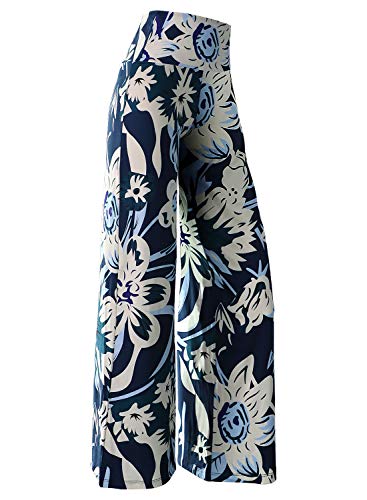
From a distance, palazzo pants can look almost like a long skirt. Take a step and the two generous legs become clear. That combination of trouser construction and broad, moving fabric is the easiest starting point for understanding the style.
The name is less precise on shopping sites. A single results page can contain fluid trousers, cropped pants, lounge bottoms and structured jeans, all carrying the word palazzo. Knowing the visual features helps you choose the shape you actually want without depending on a seller's category label.
Shopping starting points
As an Amazon Associate I earn from qualifying purchases. Purchases take place on Amazon.
These are editorial shopping starting points based on listed details, not hands-on tests. Budget and Premium describe relative asking-price tiers among the featured options when researched; they do not establish product quality. Confirm the selected size, composition and current price on Amazon. How we choose examples.
Linked Amazon product image. See the exact listing for garment details.
Start with the leg, not the waistband
The defining feature is generous fabric around each leg. In the familiar fluid version, that fabric falls away from the upper leg and stays broad toward the hem. Standing with the feet close together can conceal the division between the legs; walking reveals it. You do not need a particular body shape to create or enjoy this effect. It comes primarily from the cut and the way the material hangs.
A fitted waistband does not make the trousers narrow, just as an elastic waistband does not automatically make them palazzos. The waist is the anchor. The legs supply the characteristic volume. If the upper leg is close fitting and the width opens sharply much farther down, you are looking at a different interpretation, possibly a flare. The detailed distinction belongs in our palazzo versus flare comparison.
The features that help you recognize them
Feature
Typical palazzo appearance
What it does not guarantee
Leg width
Generous through much of the leg
A particular numerical hem circumference
Hem
Broad and open
Floor contact or a fixed inseam
Movement
Fabric can swing or form soft folds
A specific fiber or fabric weight
Waist
May be fixed, elastic, smocked or drawstring
Universal comfort or a required rise
Overall impression
Long, expansive trouser silhouette
A dress code or occasion
Use these clues together. A very broad hem alone is not enough, and a still photograph may exaggerate the width when the model has spread the legs. Conversely, a genuinely roomy pair can look relatively narrow when soft fabric collapses into folds. Front, side and walking images tell you more than one dramatic pose.
Palazzo describes a silhouette, not a material
You may encounter linen, viscose, jersey, chiffon and denim in listings. Those descriptions answer different questions. Some identify fibers, some refer to fabric constructions or surfaces, and some are familiar material names. None replaces the silhouette description. A fabric that holds its shape creates a more sculpted outline; a fabric that collapses readily creates deeper moving folds.
One useful example of this distinction comes from EILEEN FISHER's washable stretch-crepe wide-leg pant. The maker identifies its fabric as a knit containing viscose, recycled nylon and elastane. This is an adjacent wide-leg example, not a rule for palazzos, but it demonstrates why a descriptive fabric name cannot tell you composition by itself. Read the percentage breakdown and care information for the actual garment.
Fluid appearance also does not establish opacity. Light passing through fabric, the color underneath, lining and the way the garment sits on the body can change what you see. If coverage is your concern, the relevant next step is the opacity and underlayers guide, rather than choosing solely by the word palazzo.
Why wide-leg and palazzo searches overlap
Wide leg is the larger family. It can include trousers with a controlled, tailored outline as well as very expansive, flowing versions. Palazzo is a useful description for the more dramatic end of that family. The boundary is a convention, however, rather than a standardized garment measurement enforced across brands.
Retail vocabulary can be especially loose. Free People's palazzo category discusses several different trouser styles under the same shopping heading. That is evidence of how the seller organizes products, not proof that every item has an identical cut. Search categories help you discover possibilities; photographs and specifications help you identify them. Our wide-leg comparison explains where this overlap matters when choosing between pairs.
Length changes the interpretation
A long hem is part of the familiar palazzo image. It extends the broad leg into one continuous sweep. A cropped version leaves the lower leg visible and creates a different balance, although sellers may still call it palazzo. There is little value in arguing with the label if the listing clearly provides the shape and measurements you need.
Instead, decide whether you want the shoes mostly framed by fabric or clearly on view. Then examine the stated inseam and model information. A pair shown at ankle length on one person can land much lower on another. Shortening an unsuitable pair also changes where its widest section finishes. Our length guide covers the practical choice; the definition alone cannot tell you where your hem should land.
Details that vary without changing the basic idea
Front pleats can release additional fabric below a comparatively neat waist. A smocked waist gathers the top into repeated small folds. A drawstring adds a visible fastening, while a button and zip can give a more familiar trouser front. Pockets, belt loops, embroidery and prints add other distinctions. None is compulsory.
Consider the catalog's ANRABESS high-smocked-waist palazzo pants: the listing title identifies the waist treatment, loose fit and pocket. Compare that with Made By Johnny WB1484 pleated palazzo pants with drawstring, whose title identifies pleats and a different fastening. These are examples of features to recognize, not interchangeable products. Their names do not establish matching fabric, measurements or care.
When you look at either type, separate the feature you like from the broader silhouette. You might like a drawstring yet prefer less leg volume, or want wide legs with a smooth waist. Naming those two preferences individually gives you a much better shopping brief.
Palazzos are not automatically lounge pants
The same generous silhouette can be presented casually or as part of a dressed-up outfit. What changes is the complete garment and its context: surface, finish, transparency, seams, fastening and the clothes worn with it. A soft pull-on pair may suit a relaxed day, while another pair is designed to coordinate with a dressy top. An occasion word in a product title is a seller's suggestion, not the permission of an employer or wedding host.
There is historical precedent for wide trousers in elegant ensembles. The Uffizi's 1973 Emilio Pucci pigiama palazzo combines a long-sleeved top with wide trousers in printed silk. That museum object illustrates an ensemble, not a claim that all modern palazzos reproduce its construction. The separate history guide follows these distinctions without assigning one inventor to every form of wide trousers.
A practical way to read an unfamiliar listing
Find a neutral standing view. Trace the outside leg from hip to hem instead of judging only the widest pose.
Look for an open hem. Note cuffs, ankle elastic or a sharp lower-leg flare that may indicate another shape.
Read length words and numbers together. Long, cropped, petite and tall need actual measurements.
Check the selected variation. Color or size changes can lead to a different photograph or specification.
Separate confirmed details from advertising. A named pocket or closure is more concrete than a promise of universal comfort.
Write down what remains unknown, such as lining or front rise, before deciding whether to order.
For example, the title of Rekucci Travel in Style stretchy palazzo wide-leg pants supports describing it as a stretchy palazzo-labeled option. It does not tell you an exact stretch percentage, verified wrinkle performance or a guaranteed travel benefit. A title is a starting point for investigation, even when it sounds very specific.
Choose the description that solves your next decision
If you are searching for a photograph you liked, combine the name with two visible details: long palazzo pants with a smooth front, for instance, or pleated palazzo trousers with a drawstring. If you already own a pair, use measurements and construction terms when asking a tailor or seller a question. Saying the waistband gaps but the hips fit is more useful than saying the palazzo fit is wrong.
You also need not buy the widest available version to participate in the style. Moderate width, dramatic sweep, shorter lengths and tailored interpretations offer different experiences. The useful definition helps you describe that preference accurately. Once you can identify where the volume begins, how the hem finishes and what the fabric does in motion, the confusing shopping vocabulary becomes much easier to manage.
Frequently asked questions
Are palazzo pants a skirt?
They are trousers with two separate legs. Very broad legs may resemble a skirt when the wearer is standing still, especially in fluid fabric. A wrap panel or skirt overlay is an additional construction feature, so inspect the garment rather than assuming every skirt-like image shows an ordinary palazzo pair.
Do palazzo pants have to be high waisted?
No. High waists are common in listings, but the leg silhouette is the useful identifying feature. Mid-rise or lower-rise interpretations can also have generous open legs. Choose the waistband position you prefer and check the selected garment measurements; the style name does not prescribe where it must sit.
Are cropped palazzo pants incorrectly named?
Retailers use the phrase for cropped interpretations of the wide silhouette. For practical shopping, treat cropped as an important modifier rather than ignoring it. The garment may overlap with culottes or other cropped wide-leg pants, and its actual inseam matters more than winning a terminology argument.
Does flowy mean the pants will feel soft?
Flowy usually describes the seller’s intended appearance or movement. It does not verify softness against the skin, thickness, stretch or opacity. Look for material details and close photographs, and assess the actual garment if those qualities will determine whether you enjoy wearing it.
Final Verdict
Recognize palazzo pants by their generous, open legs and the long, expansive outline usually associated with the name. Treat the word as a useful style description, then let the garment details refine it. The waist can be gathered or smooth, the fabric can be fluid or more structured, and a retailer may apply the label to a cropped interpretation. Your most useful next step is to name the shape you want in concrete terms: where the width begins, how much movement you prefer and where the hem should finish. That gives you a clearer choice than relying on a category label alone.