Best Overall

UEU Linen high-waist palazzo pants
A light-color palazzo example for evaluating the exact coverage questions in this guide.
The title does not establish opacity, lining or linen percentage.
View on AmazonMaterials
White palazzo pants that look covered in a bedroom mirror can reveal pocket bags or underwear edges near a window. The solution is not automatically thicker shapewear or a different underwear color. First identify what is showing and decide how much coverage you actually want.
Some trousers are intentionally sheer, while others simply provide less coverage than expected in a particular light. Your choices range from a better-matched underlayer to a separate slip short, a professionally added lining or a different pair of pants. Each solves a different problem, and none requires changing your body.
As an Amazon Associate I earn from qualifying purchases. Purchases take place on Amazon.
Best Overall
A light-color palazzo example for evaluating the exact coverage questions in this guide.
The title does not establish opacity, lining or linen percentage.
View on AmazonBest Budget
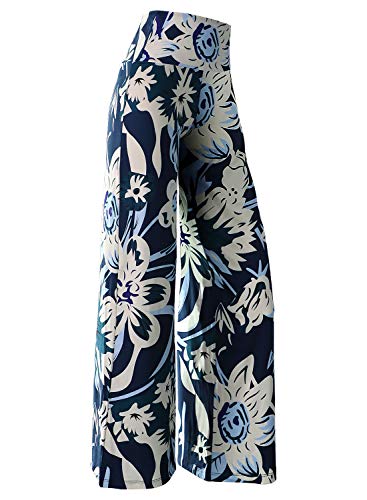
A lower-priced flowing palazzo alternative to compare if the original sheer pair needs too many extra layers.
Its title does not verify opacity or lining; inspect the exact variant before relying on coverage.
View on AmazonBest Premium

A higher-priced heipeiwa chiffon palazzo silhouette to compare for flowing occasion wear.
Chiffon and price do not prove opacity; verify lining before choosing.
View on AmazonThese are editorial shopping starting points based on listed details, not hands-on tests. Budget and Premium describe relative asking-price tiers among the featured options when researched; they do not establish product quality. Confirm the selected size, composition and current price on Amazon. How we choose examples.
Start with a clear description. Is it underwear color, the outline of elastic, a pocket bag, skin through a loose section or increased transparency across the seat? These are different problems. A color adjustment cannot remove a raised seam, and a longer underlayer cannot correct pants that are uncomfortably tight.
Check whether the effect appears only under unusually strong light or during ordinary use. Your comfort with visibility is a personal preference. You do not have to eliminate every trace of the garment's construction, but you should know what the outfit looks like in the settings where you intend to wear it. Make that decision before an event, when you have time to compare options.
Try the complete outfit in room light, then near a window with daylight falling from different directions. Turn around and look at the rear view. If you use photographs, keep them private and remember that camera exposure can differ from what someone sees in person. A phone flash is a separate condition, not the sole definition of adequate coverage.
Sit and take a few steps. Notice whether the underlayer rides upward, the pants pull across the seat or the lining bunches. Avoid stretching the fabric with your hands beyond how it behaves when worn. The goal is to understand realistic visibility, not to manufacture a worst-case result that the garment never encounters during normal movement.
When underwear color is the main issue, try a shade reasonably close to your skin tone. Nude is not one universal beige. A color that creates little contrast for one person can create a strong contrast for another. Compare the actual combination under the selected pants instead of relying on the name printed on the underwear packaging.
White underwear under white trousers can remain visible because the underwear and surrounding skin reflect light differently. A closer skin-tone match is therefore a useful styling experiment, not a guarantee of invisibility. If the outer fabric is intentionally transparent, color matching cannot turn it into an opaque textile. You may need a broader underlayer or a different garment design.
| Observed issue | Option to try | Check before committing |
|---|---|---|
| Strong underwear color contrast | A closer skin-tone shade | Daylight and rear view |
| Raised elastic or seam edge | A smoother edge construction | Comfort and stability while seated |
| Broad transparency | Slip shorts or an appropriate lining | Coverage length and movement |
| Visible pocket bags | Different pocket construction or tailoring advice | Whether the alteration affects function |
| Fabric stretched across the seat | Reassess fit | Room through hip and rise |
If an underwear outline bothers you, compare the actual edge rather than assuming tighter is smoother. A narrow elastic can create a distinct line, while a broader or differently finished edge may sit differently. Seamless is a seller category, not proof that a garment will be invisible on every person or under every fabric.
Choose an underlayer that remains comfortable during sitting and walking. If you are constantly pulling it down or adjusting the waist, it is not solving the outfit in a useful way. Compression is not necessary simply because the outer pants are light-colored. You can prefer ordinary underwear, a loose slip short or another comfortable style without treating body shaping as a requirement.
A slip short can provide more continuous coverage than underwear alone, but its length should make sense under the trousers. Check where its hem ends relative to the outer fabric's transparency. A sharp line halfway down the thigh may be more noticeable than the problem you were trying to solve.
Compare the underlayer's room through the thigh with the outer pants. It should allow your normal stride without bunching. Consider the waistband combination as well: two bulky elastic bands at the same height may feel awkward under a tucked top. Try the outfit for several minutes before deciding, and include the actual shoes if they change how you wear the outer waistband.
Lined can mean several arrangements. The lining may stop at the upper thigh, extend farther down the leg or appear only in selected colors. Ask for the lining length and composition if they matter to you. A photograph of the exterior cannot reliably establish either detail.
The Alex Evenings chiffon palazzo dress pant is an occasion-wear candidate to inspect when you want a flowing silhouette. Its title does not establish the lining length or opacity in your preferred light. Ask for those details for the exact color and size before choosing it. A higher price or dress-pant label cannot substitute for checking whether the actual construction provides your preferred coverage.
Linen, cotton and satin labels do not supply an opacity rating. The actual fabric, color, construction and fit need inspection. CottonWorks distinguishes fabric constructions such as satin; knowing the construction is useful, but it does not establish how much light a particular finished pair transmits.
The UEU milky-white linen-titled palazzo pants offer a relevant light-color example. The observed title names the color, high waist and pockets. It does not verify a linen percentage or promise that underwear will be hidden. A buyer who needs predictable coverage should look for more detail and evaluate the selected variant before planning an outfit around it.
If the fabric and fit are excellent but coverage is inadequate, ask an experienced tailor whether a lining is feasible. Bring the pants and the underlayer you have tried, and describe the exact issue. Adding lining involves decisions about attachment, ease, length, pockets and care compatibility; it is not simply placing any second fabric inside the legs.
Ask whether the proposed change will affect drape or waistband comfort. If the alteration costs more than the garment is worth to you, a separate slip short or a different pair may be more sensible. Avoid improvising an all-over fusible layer as a quick fix without professional advice. An added structural layer can change the look and movement you bought the pants for.
When the underlayer is separate, follow its own label as well as the outer garment's instructions. When lining is integrated, follow the finished garment's care directions. GINETEX explains that care guidance accounts for the whole article, including vulnerable components.
If a tailor adds a lining, ask how the altered garment should be cleaned. Do not assume the previous routine still suits every new component. Keep any written guidance with your garment notes. This is particularly relevant when the pants were easy to maintain and the proposed lining would introduce a substantially more demanding process.
If you need multiple underlayers, constant adjustment and a particular pose to feel comfortable, consider whether the pants are serving your needs. A more covered fabric or a different pocket construction may solve the problem with less effort. Returning to the shortlist is a practical decision, not a failure to style the pair correctly.
The heipeiwa chiffon palazzo listing supplies another flowing silhouette to inspect, but chiffon naming alone does not establish coverage. Compare actual lining information rather than moving from one uncertain title to another. You can also explore the flowing-pants selection for a different construction while keeping your coverage requirement explicit.
Once an underlayer works, try it with the top, waistband position and shoes you intend to wear. Check whether the top's hem creates additional bulk and whether the pants still hang naturally. A successful underwear choice should not require you to stand rigidly or avoid ordinary movement.
Keep the solution proportional to the setting and your preference. Some people enjoy visible layering in intentionally sheer designs; others want substantial coverage. Both choices can be deliberate. What matters is that you understand the result, remain comfortable and have chosen the outfit rather than being surprised by it in different light.
Not automatically. White can contrast with the surrounding skin and remain visible. Try a shade close to your own skin tone and compare it under the actual pants. If the fabric is broadly transparent, changing color alone will not create full coverage.
No. Shapewear is optional and is not required to solve transparency. Ordinary underwear with a suitable edge, comfortable slip shorts, a lining or a more opaque pair may work better. Choose coverage without assuming that compression is necessary.
Yes. Pocket bags are additional fabric layers within the trousers and can create their own contrast or outline. Changing underwear may not affect them. Compare another pocket construction or ask a tailor about realistic options if the rest of the garment works well.
No guarantee applies. Lining length, color, fit and the outer fabric all matter. A close or short lining can introduce its own outline. Check the complete garment in relevant light and during movement before deciding that it meets your preference.
Solve sheer-palazzo coverage by identifying what is visible before adding layers. A color-contrast problem, a raised seam and a taut seat need different responses. Try comfortable underlayers, inspect built-in lining and evaluate the outfit in daylight while moving normally. Do not make compression or a particular underwear style a condition of wearing light trousers. If the solution becomes bulky or inconvenient, choose a more suitable garment. The best result gives you the coverage you prefer without constant adjustment, and it remains compatible with the care and movement the pants require.