Best Overall

ANRABESS Smocked-waist lounge palazzo pants
A clear palazzo-labeled starting point with a named smocked waist and loose fit.
Compare photos and measurements; the title does not quantify leg volume.
View on AmazonComparisons
You have found two pairs of black trousers. Both have wide legs, both look comfortable, and one is called palazzo while the other is simply wide leg. The names alone will not settle the choice. What matters is how much volume you want and whether you want that volume to hold a shape or move around you.
Palazzo is usually the more expansive, flowing interpretation within the wide-leg family. The useful comparison is therefore not a rigid either-or test. It is a way to read the actual garment and decide where on that spectrum you want to be.
As an Amazon Associate I earn from qualifying purchases. Purchases take place on Amazon.
Best Overall
A clear palazzo-labeled starting point with a named smocked waist and loose fit.
Compare photos and measurements; the title does not quantify leg volume.
View on AmazonBest Budget
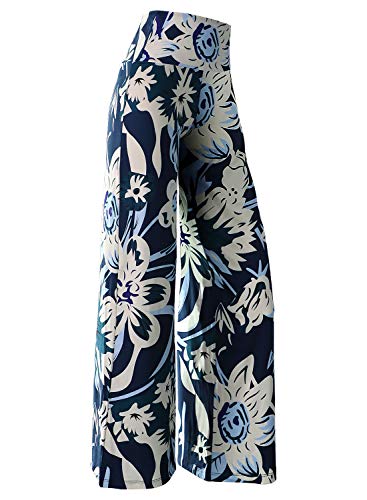
Lower observed price-tier flowy palazzo alternative for exploring the broad silhouette.
Fabric, lining and exact inseam require verification.
View on AmazonBest Premium
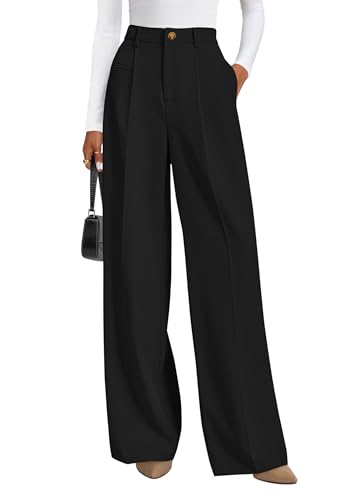
Higher price-tier tailored wide-leg alternative for comparing a more structured presentation.
Adjacent wide-leg model, not automatically a fluid palazzo or better quality.
View on AmazonThese are editorial shopping starting points based on listed details, not hands-on tests. Budget and Premium describe relative asking-price tiers among the featured options when researched; they do not establish product quality. Confirm the selected size, composition and current price on Amazon. How we choose examples.
Wide-leg trousers can be crisp, draped, cropped, full length, pleated or flat front. Palazzo narrows that description toward a generous open leg and, in its familiar version, considerable movement. That makes it reasonable to describe palazzos as a type of wide-leg pant while recognizing that many wide-leg trousers have a different look.
Retail practice is not perfectly consistent. Free People's palazzo category includes several types of trousers in its own description. A category title is therefore best used as a discovery tool. You still need to inspect the individual item. Our basic definition introduces the silhouette; this comparison focuses on choosing between the less dramatic and more expansive versions.
Width and drape are related, but they are not the same variable. A broad, relatively firm leg can stand away from the body in an architectural shape. A similarly broad soft leg may collapse into folds and look narrower from the front until the wearer moves. In a photograph, the second pair can be easy to underestimate.
Instead of asking only which pair is wider, ask two questions. How much material is available around the leg? And what does that material do when unsupported? If a listing offers a walking clip, watch whether the cloth swings freely or retains a defined outline. If it offers only stills, compare neutral standing and side views rather than using the most spread-out pose.
This also explains why a flowing palazzo can feel visually understated in one outfit and dramatic in another. A long top may cover the folds at the hip, while a tucked top displays their starting point. You are choosing a relationship between cut, material and styling, not a fixed personality attached to the word.
| Question | More controlled wide leg | More expansive palazzo |
|---|---|---|
| What is the general outline? | A roomy trouser shape that remains distinct | A broader sweep that may look skirt-like |
| Where is the volume noticeable? | Often measured through hip, thigh and hem | Often pronounced through much of each leg |
| What might the front look like? | Flat, tailored or defined by pressed pleats | Also flat or pleated, but potentially with more released fabric |
| What should be checked in motion? | Whether the upper leg has enough room | How the broad hems move around the feet |
| What does the label promise? | No fixed drape, fabric or dress code | No fixed width, length or level of formality |
These are tendencies for comparing garments, not manufacturing standards. A smooth-front palazzo or an unusually broad tailored trouser can sit between the columns. Keep the description that helps you make a decision and let the overlap remain visible.
It is tempting to put tailored fastenings on one side and elastic on the other. That shortcut breaks down quickly. Elastic can be hidden at the back of a polished trouser, and a flowing palazzo can have a fixed waistband. Front pleats can be sharply controlled or release into generous volume. The fastening and the leg shape are separate design decisions.
The catalog's ANRABESS high-smocked-waist palazzo pants explicitly identifies a gathered waist treatment. PRETTYGARDEN tailored wide-leg work dress pants is labeled as a tailored alternative. These titles make them useful starting points for a visual comparison, but they do not establish a head-to-head test, identical sizing or a specific fabric difference.
If you prefer a smooth front, search for that feature regardless of which leg label is used. If you want waist adjustability, look for a described drawstring or elastic treatment and then evaluate the leg separately. This keeps you from rejecting a suitable pair just because it sits in the other shopping category.
Start with two or three tops you actually reach for. A broad palazzo can work with a short or tucked top when you want to show the waist and the full descent of the fabric. A more controlled wide leg may feel easier if you prefer a long, loose shirt and want less total volume. Neither combination is compulsory; the point is to predict the outfit you will really make.
Try describing your preference without the word flattering. Perhaps you want the trousers to be the focal point, want room around the thighs without a skirt-like effect, or like a continuous flowing line from a long tunic. Each is concrete enough to guide a choice. A rule about height or body type is much less helpful because it assumes everyone wants the same result.
Detailed top lengths and jacket combinations are covered in the styling guide. At this stage, use one familiar outfit as your reference and change only the trousers. That makes the effect of the leg shape easier to see.
A controlled outline can be convenient when you want trousers that integrate with a blazer or a conventional office wardrobe. A fluid palazzo can also be part of a polished outfit. The words wide leg and palazzo do not establish whether either pair meets your employer's expectations.
For a useful comparison, examine opacity, the front finish, pocket behavior and the complete outfit. Check whether the fabric hangs cleanly when you sit and stand. A large hem that drags during a commute is a length problem rather than evidence that all palazzos are unsuitable for work. Conversely, a pair labeled business pants does not receive automatic approval from every workplace.
Tronjori high-waist wide-leg palazzo business pants combines both silhouette terms in one title. That is a particularly clear reminder that a shopping label can bridge the categories. Use our business-casual guide when the occasion, rather than the shape, is the deciding issue.
Linen does not automatically mean a flowing palazzo, and a stretch blend does not automatically mean an office trouser. The manufacturer's organic-linen wide-leg pant and washable stretch-crepe wide-leg pant show the same broad category applied to different compositions and garment specifications. The source lists the details for each exact style.
When comparing two pairs, read composition, lining information and the care label independently. Those details affect whether a garment fits your preferences and routine, but they do not supply a universal palazzo test. If a listing lacks fabric weight or a useful close-up, leave its opacity and softness unresolved rather than filling the gap with expectations about the fiber.
Choose a pair whose leg shape differs clearly from what you own. A very fluid, broad palazzo will teach you more about whether you enjoy that movement than a minimally wider version of familiar trousers. Keep the rest of the first outfit simple enough that you can evaluate the new shape. There is no need to buy a whole wardrobe around the experiment.
Begin with the measurements and construction of the pair you already like. A controlled wide leg may preserve the familiar waistband and pocket arrangement while adding space below. If a palazzo version meets the same requirements, it can work too. Prioritize the functions you use daily before the name printed in the title.
Look for generous open hems and a shape that stays broad through the leg. Check movement images to see whether the fabric opens as you walk. A pair can look expansive on a hanger yet remain quite structured when worn. Decide whether you want the volume to stay visible at rest or emerge mainly in motion.
Put the two listings beside one another and record the selected size, inseam, waist type and any available leg measurements. Note whether a measurement is a flat width or a circumference. Then write one sentence about the result each pair is likely to create, marking uncertain details rather than guessing.
For example: this pair offers a tailored wide-leg description and a visually controlled front; the other advertises a loose palazzo shape and a smocked waist. You can then decide which description matches your intended outfit. If both appear equally promising, the better-supported size information may be a more useful tie-breaker than the silhouette label.
Once the pants arrive, judge them in ordinary movement and with your intended shoes. If the fit or hem is wrong, identify that issue directly using the fit guide. Do not assume you dislike a whole category because one garment has the wrong rise, length or amount of ease.
In ordinary style usage, palazzo describes a very broad-leg interpretation, so it belongs within the wide-leg family. Retailer classifications are less consistent. If a listing’s picture and title disagree, rely on the actual construction and measurements rather than assuming the word guarantees a particular cut.
Yes. A seller can use wide leg for a very fluid garment, and another can call a similar shape palazzo. Compare the width and behavior of the fabric. The vocabulary has overlap, and there is no universal drape threshold that every retailer follows.
That depends on how much overall volume you want. A less expansive wide leg can keep a loose shirt outfit more contained; a flowing palazzo can extend the relaxed effect. Try the actual shirt with the trousers, paying attention to where its hem covers the waistband and upper-leg folds.
No. Both labels appear on casual and dressier garments. Fabric appearance, transparency, finishing and the full outfit carry more useful information about formality. Treat dressy or work wording in a title as positioning, then check the actual occasion expectations.
Choose palazzo when you are seeking an expansive leg and the possibility of pronounced fabric movement. Choose a more controlled wide leg when you want added room with a clearer conventional trouser outline. Those preferences can overlap, so the real decision belongs at garment level. Compare upper-leg width, hem shape, front construction and visible drape before relying on a category name. Use your existing tops and a familiar pair of trousers as references. A listing that gives you the right silhouette and reliable measurements is more valuable than one that uses the most persuasive label but leaves the essential details unknown.