Best Overall

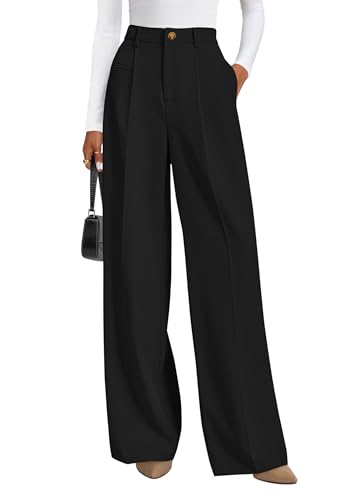
PRETTYGARDEN Palazzo work dress pants
Black work-dress palazzo example for a polished-separates outfit.
Seller positioning does not establish workplace acceptance.
View on AmazonOccasions
At one office, flowing trousers and a knit shirt fit the everyday standard. At another, the same pants may look too relaxed beside structured separates. Both workplaces might call their dress code business casual. The label gives you a starting point, but your employer's actual expectations decide whether a particular palazzo outfit belongs there.
Look for concrete evidence: the written policy, examples provided by the organization, the nature of your duties and the clothes worn for comparable meetings. Then evaluate the trousers as work clothing, including how they behave when you sit, walk and carry the things your day requires.
As an Amazon Associate I earn from qualifying purchases. Purchases take place on Amazon.
Best Overall
Black work-dress palazzo example for a polished-separates outfit.
Seller positioning does not establish workplace acceptance.
View on AmazonBest Budget

Lower-priced dressy-casual teacher-outfit palazzo example to assess against an office policy.
Fabric, coverage and exact construction need verification.
View on AmazonBest Premium
Higher-priced tailored wide-leg work pants for offices favoring a more defined trouser look.
Adjacent wide-leg style; no superior quality or universal professionalism claim.
View on AmazonThese are editorial shopping starting points based on listed details, not hands-on tests. Budget and Premium describe relative asking-price tiers among the featured options when researched; they do not establish product quality. Confirm the selected size, composition and current price on Amazon. How we choose examples.
Read the employer's policy for specific language about trousers, denim, leggings, visible drawstrings, footwear and required coverage. Some policies describe prohibited items; others give examples of accepted outfits. Keep those details separate from a broad label. A rule allowing trousers does not necessarily answer whether a particular lounge-style fabric is appropriate.
Emily Post's attire guide describes business casual as an ambiguous category that can include pants with suitable shirts or knitwear, and explicitly directs readers to company dress codes. That supports a contextual approach. It does not certify every palazzo product as professional or replace the expectations of your own organization.
Look at what colleagues wear for the kind of day you are planning. A quiet internal workday may differ from a client presentation, site visit or formal leadership meeting. Compare roles and circumstances rather than assuming that an outfit worn by one person in another department establishes a universal standard.
If you are new, ask a concrete question: whether wide flowing trousers with a blouse and closed shoes fit the expected dress level. A specific description is easier to answer than asking whether palazzo pants are allowed when the term may mean different things to different people. For an interview, use the separate interview outfit guide, because that first-impression decision has its own context.
Examine the waistband, pockets, hem and overall finish. A broad leg can be polished or relaxed depending on the garment around it. Visible lounge details may be welcome in some offices and unsuitable in others. Decide whether the pants look consistent with the workwear standard before using upper layers to change the mood.
Put them on and sit at a desk. Check the waist and crotch comfort, the way the pockets sit and whether the hem stays clear when you stand. A pair that requires frequent adjustment will be distracting during a full working day. For detailed fit diagnosis, use how palazzo pants should fit rather than trying to solve every fit issue with a different top.
| What you know about the setting | Useful starting outfit | What still needs checking |
|---|---|---|
| Relaxed office permits casual separates | Plain palazzo pants, neat knit, accepted everyday shoes | Whether lounge details and drawstrings fit the policy |
| Office favors polished separates | Restrained trousers, blouse or shirt, closed shoes | Fabric appearance, coverage and hem condition |
| Client-facing day is more formal | Dress-oriented pants, defined jacket, suitable shirt | Whether the client context expects a suit instead |
| Role includes a site or operational area | Clothing required by that area's policy | Task-specific clothing and footwear rules |
| Policy is unclear and you are new | A conservative outfit already known to be accepted | Ask for a concrete example before assuming |
The table is a decision aid, not a substitute policy. The important distinction is between an outfit preference and a requirement attached to your work. If the job specifies particular clothing for a task, follow that direction rather than assuming broad trousers can be styled around it.
Check the pants in the lighting you are likely to encounter, including brighter windows if relevant. Sit, stand and bend as your work normally requires. Look at pocket bags, tucked shirt tails and any area where the fabric stretches or separates. The aim is coverage that meets both your preference and the workplace expectations.
Neither dark color nor a seller's dress-pant wording proves opacity. If the pants show more than you want, address that before building the outfit. The sheer-palazzo guide covers the options in detail. Adding a long jacket may change what is visible while standing, but it does not necessarily solve the issue when the jacket opens or you sit.
A neat knit can be appropriate in many relaxed offices, while a shirt or blouse may better match a setting that favors defined collars and woven separates. Use the organization's expectations to decide neckline, sleeve and coverage details. There is no single top that makes every palazzo pair work-ready.
Test the hem arrangement with the pants. A full tuck can create a clear waistband line if there is room for the fabric. A shorter untucked top can look considered without adding bulk. A longer blouse may provide coverage you prefer. Keep the arrangement that stays comfortable when you type, reach and stand, rather than one that requires repeated adjustments before every conversation.
Add a blazer because the day calls for another layer or because you want its defined shape. Check that it closes comfortably over the waistband and that its sleeves accommodate the top beneath it. A blazer that looks good open but pulls during movement may be less useful than a simpler layer that fits properly.
A hip-length blazer provides one familiar proportion; a shorter jacket or longline option can also work if the office accepts the overall look. The jacket guide compares those choices. Remember that a jacket cannot turn unsuitable trouser fabric or an impractical hem into an appropriate work outfit by itself.
Choose shoes permitted by the dress code and suitable for the amount of walking or standing you expect. Closed flats or loafers may be useful in some offices; other workplaces accept sneakers or sandals. Heels are not inherently required by the palazzo silhouette. The actual policy and your needs should guide the choice.
Try the pants with the chosen shoes and inspect the back hem. It should not become trapped beneath the heel or caught in a collar. If you commute in one pair and change at work, check both. A substantial height difference may mean the same hem is unsuitable for part of the day. Plan a compatible pair rather than discovering the problem on the office floor.
Start with the bag, identification badge or other items you need to carry. Check whether a crossbody strap pulls the blouse out of its tuck or whether pocket contents distort the trouser front. Wide pants may have pockets, but the word pockets does not tell you their depth or whether they hold your work items securely.
Choose jewelry and belts according to your preference and the workplace context. A belt can add a visible detail if the waistband supports it, but it should not be required to force an ill-fitting trouser into position. If a necklace, cuff or tie interferes with the tasks you perform, simplify the outfit around that practical observation.
For a relaxed desk day, try plain dark palazzo pants, a neat knit and the everyday shoes your office accepts. Add a simple layer for temperature changes. The outfit's usefulness comes from comfortable fit and consistency with the setting, not from an elaborate accessory list.
For a more polished internal meeting, consider a restrained trouser, a button-front shirt and closed flats, with a jacket if that matches the office norm. For a client-facing day, assess whether a coordinated suit is expected before choosing flowing separates. If separates are appropriate, a defined jacket and quiet palette can be a useful direction. These sketches illustrate decisions; they do not establish dress codes.
Tronjori high-waist palazzo business pants are a relevant title-supported example to examine for a work outfit. The title positions them for business styling, but does not establish your employer's approval, fabric composition or exact fit. Check the selected size and garment information before deciding how they will work with your blouse and shoes.
PRETTYGARDEN black palazzo wide-leg work dress pants provide another dress-oriented starting point. Their work wording is seller classification, not independent testing. Compare the actual waistband, hem and coverage information. A model described as tailored wide-leg may also be an adjacent silhouette rather than a dramatically flowing palazzo, which can matter if you are seeking a particular amount of movement.
Wear the complete outfit with your normal bag and sit in a chair similar to your desk setup. Stand, reach for something, walk and check the hem without holding it. Notice whether the waistband stays comfortable and whether the top remains arranged as intended. Try the outer layer you will use on the commute as well.
If the outfit passes those checks and matches the policy, save it as a reliable work combination. If it does not, change the specific weak point: a crowded tuck, incompatible shoe, uncertain coverage or a layer that pulls. You do not need to abandon palazzo pants as a category when one pair or one arrangement fails to meet the needs of your day.
No. It describes how the seller positions the item. Your workplace policy, the actual garment and the complete outfit determine suitability. Review details such as fabric appearance, coverage, waistband and hem, then compare them with the standards for the day you are planning.
Yes, if the employer's expectations allow the resulting outfit. A suitable shirt, blouse or knit may be enough in a business casual setting. Add a jacket when it serves the dress level or temperature, rather than treating it as a mandatory accessory for all wide trousers.
An elastic waist is a construction detail, not a universal verdict. Its appearance, the rest of the garment and the workplace context matter. Some offices accept relaxed pull-on trousers; others expect more formal tailoring. Check the policy and assess the actual pair rather than relying on the waistband category alone.
Palazzo pants can belong in a business casual wardrobe when the exact pair meets the expectations of your workplace and works through the tasks of your day. Begin with the policy, then assess coverage, fit, finish and hem before choosing the top and shoes. A blazer is useful when its structure or warmth serves the outfit, but it is not automatic approval. Keep seller workwear labels in perspective and ask a concrete question when the dress standard remains unclear. Once you find a combination that is accepted and comfortable, save it as a repeatable outfit rather than rebuilding the decision every morning.