Best Overall
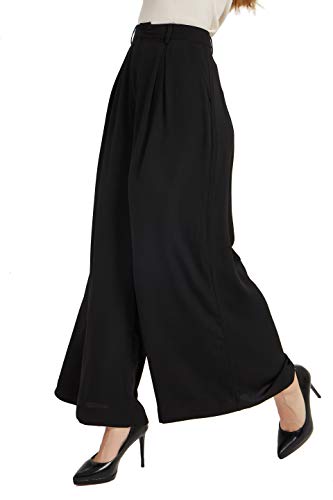
Tronjori High-waist business palazzo pants
Dress-oriented palazzo trousers to consider beneath a blazer.
Business naming does not verify office acceptance or jacket compatibility.
View on AmazonStyle
Try the same palazzo pants beneath a short jacket and a long blazer, and you get two different outfits without changing the trousers. The short layer leaves more of the waistband and upper leg visible. The long layer creates a larger continuous shape. Either can work; the useful choice is the one that gives you the coverage, movement and mood you want.
Instead of imposing a single correct jacket length, assess four details: where its hem lands, how its shoulders sit, what happens when it closes and how much fabric gathers at the sleeves. Those details explain why two apparently similar blazers can feel so different with wide pants.
As an Amazon Associate I earn from qualifying purchases. Purchases take place on Amazon.
Best Overall
Dress-oriented palazzo trousers to consider beneath a blazer.
Business naming does not verify office acceptance or jacket compatibility.
View on AmazonBest Budget

Dressy-casual palazzo example for experimenting with existing jackets.
The selected title does not establish fabric or closure.
View on AmazonBest Premium
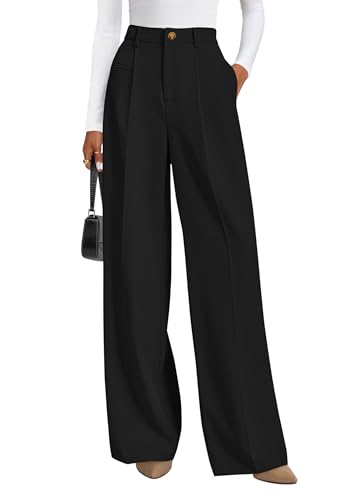
Higher-priced tailored wide-leg work pants for structured blazer outfits.
An adjacent wide-leg style; not necessarily a flowing palazzo cut.
View on AmazonThese are editorial shopping starting points based on listed details, not hands-on tests. Budget and Premium describe relative asking-price tiers among the featured options when researched; they do not establish product quality. Confirm the selected size, composition and current price on Amazon. How we choose examples.
An open jacket can disguise fit problems because its fronts do not need to meet. Fasten the intended button or zip first. Check whether the jacket pulls across the back when you reach forward, whether its hem rests awkwardly on the trouser waistband and whether its pockets remain accessible. If closing it requires holding a particular posture, the outfit is not ready for an ordinary day.
Now open it and compare. Some jackets are designed primarily as open layers, and that can be entirely suitable. The point is to know what you are choosing. A commute that requires fastening the jacket needs a different check from an indoor blazer that will stay open. Try the real inner top too: an extra sweater can change the shoulder and sleeve fit considerably.
A jacket hem near the waistband makes the trouser rise and upper leg more visible. A hem at the hip overlaps that area. A longer hem carries the upper layer farther down the outfit. These are different visual arrangements, not a ranking. Your actual proportions, the pants' rise and the jacket's shape make a catalog description such as cropped or longline only a starting point.
Stand back from a full-length mirror and look at where the layer ends relative to the waistband and pockets. If the hem lands directly on bulky gathers, try a slightly shorter or longer option. If you like the generous overlap, keep it. The practical concern is whether the jacket hangs freely and lets you move; the aesthetic concern is whether the resulting outline matches your intention.
| Layer | What it reveals or covers | Useful outfit experiment | Watch for |
|---|---|---|---|
| Short jacket | More of the waistband and trouser rise | Plain top, flowing pants, simple flats | Unexpected exposure when reaching |
| Hip-length blazer | Some waistband and pocket overlap | Blouse, restrained pants, office shoes | Hem sitting on gathered fabric |
| Longline blazer | More coverage over the upper leg | Tonal inner outfit, contrasting blazer | Restricted stride or pulling closure |
| Relaxed overshirt | Variable coverage depending on fastening | Tee, casual palazzo pants, sneakers | Several loose hems competing |
Use this table to compare pieces you own before shopping. One jacket can produce several effects if it looks good both open and closed. Pinning the hem temporarily while standing can help you visualize length, but remove pins before moving and do not treat that experiment as an alteration plan.
A long blazer can have a defined shoulder, while a short jacket can have dropped, relaxed shoulders. Length alone therefore does not determine how structured the outfit feels. Put on the jacket and look at where the sleeve begins. Decide whether you want a clean shoulder edge or a softer line that continues into the arm.
When palazzo fabric is very fluid, a defined shoulder can offer a clear contrast. If you prefer an entirely relaxed outfit, a soft overshirt can extend that mood. Neither approach requires changing your body shape or hiding part of it. Assess the garment: are the shoulder seams sitting as intended, and does the jacket allow your arms to move without dragging the whole layer upward?
Start with a blazer color that works with the pants and one top. Navy with cream, charcoal with black, or tan with dark brown are possible combinations. Matching the jacket and pants is another option, but close colors in visibly different fabrics can look different under daylight. Look at them together in the lighting where you will wear them.
For workplace styling, choose the degree of formality your office expects. Emily Post's attire guide distinguishes business casual from business formal and tells readers to follow their company dress code. Adding any blazer to lounge-style pants does not automatically create a suit. If your setting expects coordinated tailoring, assess the complete outfit rather than relying on the jacket as a formality shortcut.
Wear a long blazer open first and walk naturally. Notice whether the fronts fall straight or become caught on the pants' pockets or waistband. Then sit and stand. If the jacket rides up and stays there, identify whether the issue comes from its own fit or friction against the trousers. A longer hem is not inherently the problem; a crowded overlap may be.
A tonal inner top and pants can give a long contrasting blazer a clear role as the outer frame of the outfit. Alternatively, repeat the blazer color in the shoe or bag. Avoid adding details simply because the silhouette is generous. A long layer already supplies a substantial design element, and a quiet neckline often gives it enough space without demanding a fitted top.
A short layer does not have to end above the waistband. A jacket that reaches just below it may still reveal most of the trouser shape while providing coverage when you lift your arms. Try a seated check, especially with higher-rise pants: the jacket hem and waistband can meet differently once the fabric folds across your lap.
For a weekend outfit, a short denim jacket can sit over a plain tee and relaxed palazzo pants. For a dressier version, use a compact jacket with a simple front and a blouse. Let the jacket's shape supply structure rather than adding a belt, necklace and elaborate shoe all at once. If you enjoy those details, add them one by one and keep the combinations you prefer.
A full blouse sleeve inside a narrow jacket sleeve can bunch even when both garments fit separately. Pull the blouse sleeve into place before putting on the jacket, then bend your arms. If the fabric repeatedly gathers near the elbow, change the inner layer or choose a roomier sleeve. Do not assume you need a smaller blouse just because the two sleeves compete.
Similarly, a thick sweater beneath a closely fitted blazer changes the overall arrangement. Test the sweater's cuff, neckline and hem as well as its body. A long untucked sweater below a short jacket creates multiple horizontal edges; that can be intentional, but compare it with a shorter inner layer to see which version you like. For waistband technique, use the separate tucking guide.
ANRABESS black high smocked-waist palazzo pants offer a relaxed example with an explicitly described waistband. Consider how a jacket hem sits over that smocking, particularly when closed. A short overshirt or open casual jacket may be a useful starting point. The title alone does not tell us the waistband's depth or the fabric thickness.
Tronjori high-waist palazzo business pants provide another starting point for a blazer outfit. Their title supports the business-oriented positioning, but selected-size measurements and actual drape still determine compatibility. Compare them with a hip-length blazer and a simple shirt, then decide whether a longer jacket improves coverage or merely adds an overlap you do not need.
If a coat must fit over the blazer, check all three upper layers together. The coat needs room at the shoulders and sleeves, and its hem should not trap the blazer in an uncomfortable fold. A longer coat can cover the blazer; a shorter one can intentionally reveal it. Make the decision in motion rather than judging a hanger arrangement.
Carry your usual bag and reach for its contents. Wide sleeves, long blazer fronts and a bulky bag strap can interfere even when the individual pieces look balanced. Keep pockets usable, closures accessible and the trouser hem clear. Once those practical details work, you have freedom to choose a crisp contrast or an entirely fluid silhouette.
If the combination feels busy, identify the actual point of competition. It might be a patterned blazer over a patterned blouse, several different hem lengths, or a tie waistband beneath a buttoned jacket. Change one item and look again. There is no need to declare all oversized jackets or all wide pants incompatible.
Photograph a front and side view if that helps you compare options. Keep the image as a wardrobe note with the exact top and shoes, because changing either can alter the overall impression. The useful result is a repeatable outfit assembled from pieces that work together, not a theoretical rule about the only correct blazer length.
Yes. Treat the larger silhouette as intentional, then check shoulder placement, sleeve movement and hip room. A simple inner outfit can make the blazer's shape easier to see. You do not have to reveal your waist, but the jacket should move comfortably instead of becoming caught on the trousers.
No. An elastic or smocked waistband can remain visible if you like its appearance and it suits the setting. If you prefer coverage, choose a jacket or inner top that stays in position when seated and reaching. Covering the waistband is a styling preference, not a universal requirement.
Compare the layered hem with a shorter or tucked version of the same shirt. The visible shirt can be a deliberate part of the outfit, especially casually. Keep it if you like the proportions and the layers move freely; change it if the extra edge distracts from your intended look.
Choose a jacket for palazzo pants by evaluating the complete overlap: shoulders, sleeves, closure and hem. Short jackets reveal more of the trouser shape, hip-length blazers provide a familiar middle ground, and longer layers create generous coverage. None is the automatic winner. Start with a jacket you enjoy wearing, test it open and closed over the intended top, and adjust the point where fabrics crowd each other. A successful pairing lets you sit, reach and walk normally while expressing the degree of structure you want. Keep the simplest version that works for your day, then add details deliberately.