Best Overall

Floerns Velvet flare-palazzo trousers
A directly relevant flare-leg palazzo listing for examining a hybrid shape.
Title alone does not establish the flare starting point or stretch content.
View on AmazonComparisons
Two pairs of pants can have equally wide hems and still look completely different. If one stays roomy through the upper leg and the other narrows around the knee before opening out, the width is doing a different job.
That change in where the leg expands is the clearest way to compare palazzo pants with flares and bell-bottoms. It also explains why buying by hem width alone can lead to the wrong silhouette, particularly when a listing combines several names.
As an Amazon Associate I earn from qualifying purchases. Purchases take place on Amazon.
Best Overall
A directly relevant flare-leg palazzo listing for examining a hybrid shape.
Title alone does not establish the flare starting point or stretch content.
View on AmazonBest Budget
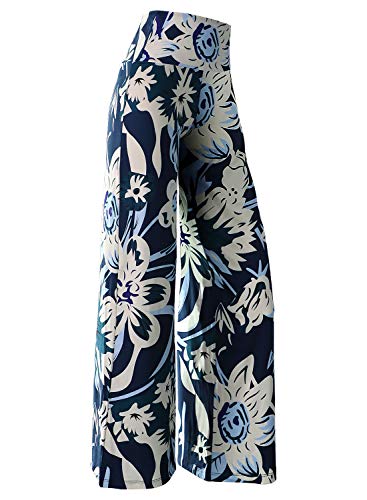
Lower price-tier flowy palazzo option for comparison with the flare-labeled pair.
No measured thigh or hem comparison has been performed.
View on AmazonBest Premium

Higher price-tier stretchy palazzo alternative if a broad-leg description is your preference.
Premium is a price position, not a tested construction or quality advantage.
View on AmazonThese are editorial shopping starting points based on listed details, not hands-on tests. Budget and Premium describe relative asking-price tiers among the featured options when researched; they do not establish product quality. Confirm the selected size, composition and current price on Amazon. How we choose examples.
Begin at the hip and follow the outside edge downward. On a typical palazzo, the line remains generous as it travels toward the foot. On a flare, the upper portion is more fitted or controlled, and the lower section opens after a narrower point. The result is a different rhythm: continuous breadth versus a change from close to wide.
Do the same on the inside leg where the photograph allows. A model's pose can make the outside edge look dramatically flared even when the garment is relatively straight. Looking at both edges helps reveal whether the fabric itself changes width or whether the stance is creating the impression.
This is a comparison of design tendencies. A pair may have a relaxed thigh and a modest flare, or a broad leg that expands further at the hem. If it sits between categories, describe the actual transition rather than forcing it into an absolute definition.
| Shape | Upper leg | Lower-leg transition | Question to ask |
|---|---|---|---|
| Palazzo | Generally roomy through much of the leg | Broad line continues toward an open hem | Do I want this much volume above the knee? |
| Flare | Often closer fitting than the hem | Widens around or below the knee | Does the narrow point sit where I expect? |
| Bell-bottom | Commonly controlled through thigh and knee | A more pronounced outward lower-leg shape | Is the contrast between knee and hem the effect I want? |
| Hybrid wide flare | May already have considerable room | Additional width appears lower down | Which construction details does this exact pair show? |
There is no single numerical hem opening that converts a flare into a bell-bottom or a wide leg into a palazzo. Size, pattern and the seller's language all affect the description. Compare proportions within the garment rather than using a universal cutoff.
A flare's narrowest region creates the contrast that makes the lower leg look expanded. If that region lands much higher or lower than you expected, the overall shape may look different even when the waist and total length seem right. This is one reason height alone cannot predict how a flare will sit.
When trying the pants on, locate where the fabric begins to move outward. Bend the knee and sit. The garment should allow those actions without requiring you to pull the legs into position each time. If the pattern has a close upper leg, check that the intended fit does not become persistent strain.
In a palazzo, there may be no comparable knee shaping to align. The fit assessment then concentrates on the waist, seat, rise and the way the broad legs fall. That does not make fit automatic; it simply changes which part of the pattern deserves attention.
A very wide bell-bottom can still be close fitting above the knee. If your main aim is more room around the thighs, the dramatic hem may be irrelevant. Conversely, a modest-looking palazzo in soft material may have substantial upper-leg space that collapses into folds in a still image.
Read any available thigh and knee measurements, making sure you know whether they are flat widths or full circumferences. Compare them with a well-fitting reference garment of similar construction. Stretch can influence how a close fit feels, but it should not be used to guess that an undersized pair will become comfortable.
For a systematic fit check, use the fit guide. Here the essential decision is whether you want the upper leg to be visibly outlined or surrounded by more loose fabric. That preference is more useful than asking which shape is supposedly best for everyone.
Denim makes the overlap especially clear. NYDJ's Mia Palazzo Jeans in Sunset Villa is named palazzo, while the manufacturer's description says it hugs the hips and thighs before opening into super-flared legs. The exact model shows that a brand can use palazzo for a silhouette with a close upper leg.
This is not a reason to ignore the listing. It is a reason to read the descriptive sentence beneath the title. The manufacturer's explanation tells you more about that garment than a generic style definition. Do not transfer the description, composition or measurements to a different Mia wash without checking its page.
The catalog's Floerns velvet elastic-waist flare-leg palazzo pants also combines flare and palazzo in its title. That title supports discussing it as a hybrid-labeled option. It does not establish exactly where the flare begins, how much the cloth stretches or how close the upper leg fits.
If you like an uninterrupted broad line, start with a palazzo shape that remains roomy above the knee. If you want a distinct expansion near the lower leg, start with a flare. A bell-bottom interpretation is worth considering when that contrast itself is the main design feature you enjoy.
Neither choice requires a particular height, age or body type. You can prefer to show the upper-leg outline, prefer to soften it with loose fabric, or enjoy both on different days. Replace abstract claims about looking balanced with a description of the effect you want to see.
For example, one person may want the hem to be the focal point beneath a long shirt. Another may want broad fabric visible from the waist downward with a short jacket. Those preferences lead toward different constructions without implying that either outfit is more correct.
A sole or heel changes where the hem sits relative to the floor. It does not turn a flare into a palazzo. Try the intended shoes when judging either pair because the lower-leg shape can look very different when the hem is lifted, pooled or caught on the shoe.
Flares can be particularly sensitive to where the widening section ends. A hem that is too short for your intended look can make the expansion appear abrupt. Too much length can conceal the shape in folds. A palazzo can also lose its intended line when it gathers on the ground. Neither style needs to drag to be recognizable.
Our length guide handles clearance and shoe changes. For actual footwear selection, use the shoe guide. Keep those decisions separate from the basic question of where the leg gains width.
Removing length from the bottom can also remove some of the widest part of a flare. The newly finished hem may be narrower than the original, reducing the contrast you liked. How much changes depends on the pattern and how much length must come off.
A palazzo with nearly parallel lower seams may lose less of its width when shortened, while a palazzo that expands strongly near the floor may face a similar issue. The labels do not decide the alteration outcome; the seam lines do.
Before buying a pair that needs substantial shortening, ask whether its shape will survive the change. A short-length version designed with a different knee position may serve you better than cutting a regular pair. A tailor can assess the specific garment, and the hemming guide covers the construction task separately.
Arolina flowy high-waist palazzo pants offers a broad-leg description without flare wording. The Floerns option explicitly adds flare leg and velvet. Rekucci Travel in Style stretchy palazzo wide-leg pants emphasizes stretch in its name. Those are distinct prompts for inspection, not enough information to claim one has the largest hem or best movement.
When comparing them, mark the shape you can actually see in the exact listing and leave unsupported details blank. If you cannot identify the knee transition, look for a neutral photograph or request a measurement. An honest blank is more helpful than an invented specification.
The purpose of a comparison is to narrow your choice. You might eliminate a close-thigh shape because you want more upper-leg room, or eliminate a very broad palazzo because the lower-leg flare is what attracted you. Either outcome is useful even before you compare fabric or color.
Keep these notes separate from the size label. If the waist fits but the knee point is wrong, moving to a different size may not fix the proportion. A different length option or pattern may be the more direct solution. The goal is a garment whose internal shape suits your plan, not merely a larger or smaller version of the wrong design.
Usually the distinction is where the width appears. Bell-bottoms commonly have a more controlled upper leg and a pronounced lower-leg expansion, while palazzos generally stay broad through more of the leg. Retailers overlap terms, so inspect the thigh, knee and hem rather than relying on the title alone.
Yes, a brand may use both words, and some designs combine a roomy leg with additional expansion near the bottom. The useful description explains that actual shape. A hybrid name is not necessarily an error, but it leaves you responsible for checking the details.
A typical palazzo is more likely to offer generous upper-leg room than a close-fitting flare, but the exact pattern decides. Compare thigh measurements and photographs, and try sitting if you can. Do not infer upper-leg ease from a very wide hem.
It can. Cutting from the bottom may remove part of the widest area and leave a narrower finished opening. The effect depends on the seam angle and amount removed. Ask a tailor to assess the actual pair before committing to a substantial shortening.
The most revealing difference is the journey from hip to hem. A palazzo usually keeps that journey broad; a flare creates a closer section followed by outward expansion, with bell-bottom describing a more pronounced version in common usage. Look at the knee and thigh as carefully as the hem. Hybrid labels, especially in denim, make the manufacturer’s actual description especially valuable. Choose the shape that provides the upper-leg room and lower-leg effect you want, then confirm the knee placement and finished length. If those proportions are wrong, another cut or length option may solve the problem more directly than changing the size.