Best Overall
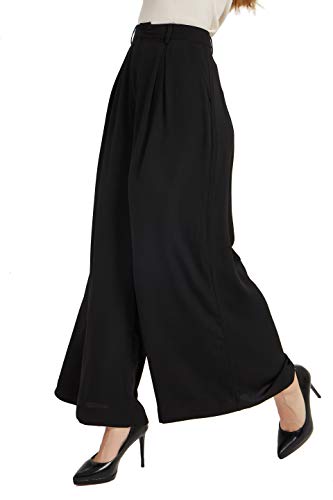
Tronjori High-waist business palazzo pants
Plain black high-waist palazzo business styling gives a defined refined-trouser role to evaluate.
Compatibility with existing tops and shoes must be tried.
View on AmazonStyle
A capsule wardrobe fails when the pieces match in theory but cannot make the outfits your week requires. Two palazzo pants may share a color palette yet need entirely different shoes, tops, and care routines. The useful question is not how many combinations a spreadsheet can multiply. It is how many complete outfits you would willingly wear.
Build this capsule from your schedule and existing clothes. The example inventory is a planning model you can adjust, not a mandatory shopping list or a claim that everyone should own the same number of garments.
As an Amazon Associate I earn from qualifying purchases. Purchases take place on Amazon.
Best Overall
Plain black high-waist palazzo business styling gives a defined refined-trouser role to evaluate.
Compatibility with existing tops and shoes must be tried.
View on AmazonBest Budget
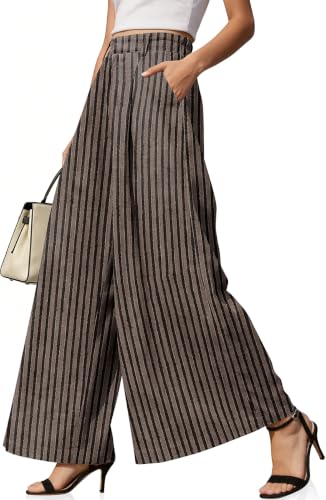
Lower-priced high-waist linen palazzo title offers another base-trouser candidate.
Composition, care, and selected fit require verification.
View on AmazonBest Premium

Higher-priced black Starfish high-rise palazzo pants provide a base-color alternative for a named wardrobe gap.
The price tier does not establish better versatility or quality.
View on AmazonThese are editorial shopping starting points based on listed details, not hands-on tests. Budget and Premium describe relative asking-price tiers among the featured options when researched; they do not establish product quality. Confirm the selected size, composition and current price on Amazon. How we choose examples.
List the recurring settings you dress for: home, work, errands, social plans, and travel if relevant. Give each a realistic share of the week. If you spend most days in a casual setting, a capsule made mostly of occasion pieces will not become useful simply because its colors coordinate.
Then note practical constraints. You may walk daily, need a particular workplace standard, prefer longer tops, or have limited space to dry clothes. These details determine what a small wardrobe must do. They are more important than reaching an attractive round number of pieces.
Include seasonal exposure. A capsule for mostly indoor summer days is a different project from one for wet winter commutes. Keep the scope clear enough that you can test it. You can build separate seasonal groups or add a small weather module rather than demanding that every garment serve every month.
Begin with one dependable base pair. Choose the color, level of dress, and care needs that fit the largest part of your schedule. A plain dark trouser might serve some wardrobes well, while a neutral casual pair or a favorite print might be more useful in another. Familiarity matters: an existing pair that you repeatedly wear is strong evidence of a useful role.
Add a second pair only if it solves a different problem or gives you necessary laundry coverage. It might be a lighter casual option, a dressier evening pair, or another base trouser for frequent wear. Two nearly identical pairs can still be useful if they support a realistic rotation, but name that purpose rather than inventing variety.
The Tronjori black high-waist palazzo business pants are a title-supported example of a work-oriented base to compare. The TARSE black linen palazzo drawstring trousers with pockets suggest a more relaxed role. They are not interchangeable merely because both titles include black and palazzo; verify the exact construction and how each fits your wardrobe.
| Group | Example pieces | Purpose |
|---|---|---|
| Two trousers | P1: plain refined palazzo; P2: relaxed palazzo | Different levels of dress or useful rotation |
| Four tops | T1: everyday tee; T2: plain shirt; T3: refined knit; T4: distinctive blouse | Cover ordinary days and a dressier plan |
| Two layers | L1: casual overshirt or cardigan; L2: jacket suited to your setting | Adjust temperature and formality |
| Two shoes | S1: familiar walking pair; S2: a second suitable pair | Cover the actual routes and venues |
This model contains ten pieces: two trousers, four tops, two layers, and two pairs of shoes. Underwear, socks, sleepwear, exercise clothes, specialized work clothing, bags, and weather protection are not included in that count. Add them according to your needs rather than pretending the example is a complete packing list.
Use your own garments in the roles. A tunic can replace the plain shirt, an occasion top can replace the distinctive blouse, and a different outer layer can replace the jacket. The structure exists to reveal useful relationships, not to prescribe a style identity.
Two trousers and four tops create eight theoretical pairings before layers and shoes enter the calculation. That arithmetic does not prove eight wearable outfits. A top may be too bulky to tuck into one pair, a jacket may not work with another hem, or a shoe may leave one trouser dragging.
Try six complete combinations that cover your real plans. Put each on with shoes and the bag you expect to carry. Photograph or record only the versions you would actually wear. If a combination needs an imaginary belt, an unowned top, or a different hem, mark it as unresolved instead of counting it as finished.
| Outfit | Example combination | Real-world check |
|---|---|---|
| Casual errands | P2 + T1 + S1 | Walking comfort and hem clearance |
| Cooler casual day | P2 + T2 + L1 + S1 | Layer storage when removed |
| Refined daytime | P1 + T3 + S2 | Seated waist and top arrangement |
| Work-appropriate option | P1 + T2 + L2 + S2 | Actual employer standard |
| Relaxed social plan | P2 + T4 + S2 | Whether all pieces share a suitable finish |
| Dressier evening | P1 + T4 + L2 + S2 | Invitation and movement requirements |
Hem compatibility is a practical limit on a palazzo capsule. If one pair works only with a high heel and another only with a flat, the shoes divide the wardrobe into smaller groups. That may be acceptable if it matches your life, but do not count both shoes as interchangeable with both trousers.
Try each intended pant-and-shoe pairing while walking and turning. Record which combinations maintain the clearance you want. Similar effective shoe heights can simplify the capsule, but the actual shape and fit still need checking. A thick sole and a heel of a similar stated height do not automatically produce the same relationship with the hem.
If an alteration would make a frequently worn trouser work with your everyday shoe, it may fill the wardrobe gap more effectively than buying another pant. Use the length guide for that decision, then keep the compatible shoe pairings in your outfit record.
Choose colors that already recur in clothes you like wearing. You might build around navy and cream, black and muted green, or several tones from a favorite print. There is no requirement to remove bright colors or own only neutrals. A repeated accent can connect pieces as effectively as a repeated base color.
If a printed trouser is central to the capsule, identify which tops work with it before buying more prints. A plain top that connects to three outfits has a clear role. A new top that matches only one trouser may still be worth owning, but recognize it as a more specialized addition.
Check near-matching colors in the same light. Two garments that appear identical online may create an accidental mismatch in person. A deliberate contrast is often easier to use than an uncertain attempt at a matching set.
A two-trouser capsule needs enough availability to cover the days when a pair is being cleaned, drying, or awaiting attention. Base the rotation on the garments' actual labels and your routine. Do not assume you can wash every item together because the colors coordinate.
GINETEX explains that care instructions reflect the complete article, including details beyond the main fabric. Use the labels to group your real garments, rather than assigning all linen or all dark pants one treatment. A capsule that relies on a care routine you do not have time to perform is undersupplied in practice.
If a second pair mainly provides laundry backup, that is a legitimate job. You do not need to justify it with a dramatic new color or silhouette. Equally, a rarely worn dry-clean-only occasion pair should not be counted as the replacement for your everyday trouser unless you would actually wear it in those settings.
For a short trip using the ten-piece example, suppose you wear P2, T1, L1, and S1 in transit. That leaves six example pieces to pack: P1, T2, T3, T4, L2, and S2. This is only a count of the clothing model, not the entire luggage requirement.
Now compare the available outfits with the trip schedule and laundry access. If there are several dressy events, one distinctive blouse may not meet your preferences. If you will do extensive walking, the second shoe needs a real function. Add weather gear, underwear, sleepwear, and other essentials separately.
For the physical packing method, use the palazzo packing guide. Here, the useful work is verifying that the pieces you take can serve the planned days without depending on unavailable laundry or an outfit you have never tried.
Write the gap as a function: a top that works untucked with both pants, a jacket that closes over the knit, or a second trouser that can cover laundry days. This is more precise than deciding the capsule needs something new. Compare purchases against the existing outfit record.
The Lands' End Starfish high-rise palazzo pants in black are a higher-priced base-trouser example to evaluate if that is the missing role. The title does not establish their composition, care, or compatibility with your tops. A premium price tier does not make them a better capsule choice than a less expensive pair that fulfills the role.
Set aside a candidate that requires several additional purchases before it works. It may belong in a later wardrobe project, but it has not filled the current gap efficiently.
Notice which outfits you repeat and which you avoid. Identify the reason: uncomfortable waist, wrong shoe, difficult care, a top that shifts, or simply a color you do not reach for. Make one targeted change instead of replacing the whole wardrobe.
A useful capsule can grow or shrink as your schedule changes. Its value comes from reliable complete outfits and clear decisions, not from keeping the number of pieces permanently fixed.
Enough to cover your actual outfit needs and laundry downtime. One pair may be sufficient in a broader wardrobe, while two or more may be useful if palazzo pants are your main everyday bottom. Give each pair a real role rather than treating a fixed number as the goal.
Yes, if you like wearing it and several existing tops work with it. Use colors from the print to identify compatible pieces, then test complete outfits with shoes and layers. A print that reliably serves your week is more useful than a neutral pair you avoid.
That would simplify the wardrobe, but it is not required. Record which shoes give each trouser suitable hem clearance. If the shoes divide the capsule into groups, make sure each group still covers the settings you need instead of counting theoretical combinations.
No. It counts two trousers, four tops, two layers, and two pairs of shoes. Underwear, socks, sleepwear, specialized clothing, bags, and necessary weather protection sit outside that example. Add them explicitly when making a complete wardrobe or packing plan.
Build a palazzo capsule around complete outfits you have tried and would willingly repeat. Give each trouser a role, connect tops and layers through useful proportions and colors, and verify shoe compatibility at the hem. Include cleaning time and the practical demands of your schedule before declaring a small inventory sufficient. The ten-piece example is a tool for seeing those relationships, not a shopping requirement. Buy only after naming a specific gap, and review the arrangement after real wear. A successful capsule makes everyday dressing easier because its pieces work together in practice.