Best Overall
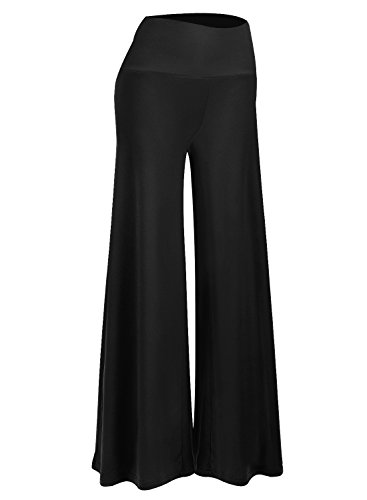
Arolina Flowy high-waist palazzo pants
A casual solid-black example for color and texture combinations.
Opacity and composition are not verified by the title.
View on AmazonStyle
Black palazzo pants give you a broad, dark area to build around. That can make a bright shirt stand out, let a textured top become the main detail, or support an outfit composed almost entirely of black. The color is adaptable, but it does not make every combination automatically cohesive.
Small differences become useful design choices: a matte trouser beside a glossy bag, a soft black knit against a crisp white collar, or a pale shoe appearing beneath the hem. Decide which detail you want to notice first, then let the remaining pieces support it.
As an Amazon Associate I earn from qualifying purchases. Purchases take place on Amazon.
Best Overall
A casual solid-black example for color and texture combinations.
Opacity and composition are not verified by the title.
View on AmazonBest Budget

Lower-priced black palazzo example for existing everyday tops.
Casual listing language does not establish dress-code suitability.
View on AmazonBest Premium

Higher-priced solid-black flowing alternative for tonal styling.
No superior quality or exact shade match is claimed.
View on AmazonThese are editorial shopping starting points based on listed details, not hands-on tests. Budget and Premium describe relative asking-price tiers among the featured options when researched; they do not establish product quality. Confirm the selected size, composition and current price on Amazon. How we choose examples.
Before choosing accessories, identify the focal point. If it is the top, use color, a neckline or texture there and keep the lower outfit quiet. If it is the trousers' movement, a simple top can leave that movement easy to see. If it is a shoe or bag, let that item contrast with the black rather than introducing several unrelated accents.
This is a practical editing method, not a requirement to wear only one interesting thing. You can enjoy several strong details together. The exercise is useful when an outfit feels unresolved: naming the feature you want to emphasize makes it easier to decide what to remove, repeat or change.
Place the top and pants beside each other under natural light. One may appear warmer, cooler, faded or more reflective than the other. If you want them to read as a coordinated set, those differences matter. If you prefer an assembled outfit, they can be part of its character. A deliberate texture contrast can make near-black shades feel less dependent on an exact match.
Try a fine knit with fluid pants, or a crisp shirt with a softer trouser surface. A bag with a different finish can add another edge without introducing a new color. You do not need every piece to be shiny or every piece to be matte. The question is whether the differences look intentional to you when worn together.
| Contrast level | Outfit starting point | What becomes noticeable |
|---|---|---|
| Low | Black pants, charcoal top, dark shoes | Texture and shape |
| Moderate | Black pants, olive or muted blue top | A quiet color change above the waist |
| Strong | Black pants, white shirt, dark shoes | The shirt outline and neckline |
| Accent-led | Black top and pants, bright bag | One portable color detail |
| Warm neutral | Black pants, camel knit, brown accessory | Contrast between dark fabric and warm tones |
These are options to compare, not universally correct palettes. Move the accent if you prefer attention elsewhere: a bright shoe behaves differently from a bright blouse because much less of it may be visible. The amount of color in view matters as much as the color itself.
A white button-front shirt with black palazzo pants can look crisp when tucked, relaxed when left loose, or layered when worn open over a dark top. Try the version that suits your plans and desired coverage. The contrast is already strong, so elaborate jewelry is optional. A simple cuff or collar may provide all the detail you want.
Consider the shirt's bottom edge. A curved tail hanging below a short jacket creates a different outline from a straight cropped hem. If the shirt is long and stiff, a small front tuck may pull the sides awkwardly; a full tuck or open arrangement may be easier. The dedicated tucking guide explains the hands-on techniques.
Black pants can give a colored blouse a clear setting. Try cobalt, rust, green, pink or another color you already enjoy. Keep the shoes and bag restrained for the first version. Then decide whether repeating the blouse color in a small accessory improves the outfit or makes it feel too coordinated for your taste.
If the blouse has several colors, choose one of its quieter tones for an additional item. You can also leave the print alone and use plain black accessories. There is no need to match every color in a patterned top. The goal is a combination you like as a whole, not a checklist proving that every shade has been repeated.
For an office where palazzo trousers are appropriate, use shape and finish to distinguish the pieces. A defined collar, jacket lapel or neat neckline gives the upper outfit a clear edge. Check that the pants look and behave as trousers for that setting, especially if their listing emphasizes lounge or beach use.
Black does not override a workplace dress code. Emily Post's attire guide treats business casual as a contextual category and directs readers to company rules. If your workplace expects formal suiting, assess that requirement directly. For ordinary office outfit planning, see palazzo pants for business casual work.
For dinner, you might keep the same black pants and replace a daytime tee with a blouse that has a more refined finish. Alternatively, keep a plain top and change the bag or shoe. One visible surface can shift the outfit's mood without requiring a completely new set of clothes.
A glossy accessory against matte fabric is one option; a textured knit beside fluid trousers is another. Do not assume black pants are suitable for every formal event. Their fabric, construction, condition and the event instructions still matter. If the pants are visibly relaxed lounge trousers, a decorative shoe may not provide the level of formality the occasion expects.
You can combine black with brown or navy. Put the pieces together and judge their actual shades rather than following a blanket ban. A warm brown bag can create a clear contrast with black pants. A very dark navy top may produce a subtler difference that is easiest to see outdoors.
If a near match bothers you, make the distinction clearer: add a lighter layer, choose a noticeably different texture or use a more contrasting top. If you like the quiet variation, keep it. Exact color matching is necessary only when it serves the effect you want, such as an outfit intended to resemble a coordinated set.
Inspect the areas most visible in your outfit: the front of the thighs, the seat, the waistband near a tucked top and any section beneath a shedding layer. A pale sweater or fuzzy scarf may leave visible fibers on dark fabric, so try those pieces together before relying on the combination for a long day.
Use a garment-appropriate method if you need to remove surface lint, and test unfamiliar tools in an inconspicuous area. Avoid treating an aggressive brush or adhesive as suitable for every textile. Follow the pants' care guidance; GINETEX emphasizes garment-specific care. The styling decision may simply be to choose an outer layer that leaves less visible material on the trousers.
The title of Arolina black high-waist flowing palazzo pants places them in a casual direction. They are a relevant example for a tee, open shirt or relaxed knit outfit. The title does not establish opacity, fabric composition or a specific inseam, so do not infer those details from the color.
Tronjori black high-waist palazzo business pants offer a dress-oriented comparison. A shirt and structured jacket are natural styling experiments, but the word business is not an independent guarantee. Compare the selected garment information and how it works with your own tops. These examples illustrate different outfit roles rather than a ranking of black trousers.
A black shoe can sit quietly beneath black pants, making the fabric's movement more prominent. A pale, metallic-looking or colored shoe can create a visible accent whenever the hem lifts. Decide whether that accent should be a small surprise or a major part of the outfit; wide full-length pants may conceal most of the shoe.
Whichever direction you choose, check the actual hem with the shoes on. Color coordination cannot compensate for fabric trapped beneath a heel or caught in a sneaker collar. The shoe comparison guide handles those practical differences. Once movement works, toe shape and color are open to preference.
Keep the black pants and one reliable shoe constant. Make a casual version with a tee, an everyday version with a shirt, and a dinner version with your preferred refined top. Add the same jacket to each and see where it works. This gives you a realistic view of the pants' usefulness without assuming they suit every occasion.
Record the combinations that feel right. If one needs too many adjustments, identify the weak link rather than buying more black pieces indiscriminately. It may be a shirt length, a near-matching shade or a shoe that changes the hem clearance. Black is a flexible starting color, but successful outfits still come from specific pieces working together.
View them together in daylight. You can accept the variation as part of an assembled outfit, emphasize a texture contrast, or choose a clearly different top color. A near match is only a problem if you want the pieces to appear like a single coordinated set.
No. Black lounge pants, casual drawstring trousers and tailored pants can communicate different levels of formality. Assess the exact fabric, construction and condition, then apply the workplace or event expectations. Color alone does not determine whether the outfit is appropriate.
Yes, if you like the combination. A noticeably warm brown can create a deliberate contrast, while a very dark brown produces a quieter variation. Check how much of the shoe shows beneath the hem and consider repeating its tone in a bag or another small detail if desired.
Black palazzo pants are most useful when you give them a clear role in the outfit. They can support a colored top, provide a tonal base or let texture become the main detail. Compare near-black shades in real light, check visible lint where layers touch, and choose shoes for the actual hem. Keep formality separate from color: the garment and setting still determine whether a look suits work or an event. Begin with one reliable combination, then change a single top, layer or accessory to explore another mood. The result can remain simple without becoming indistinct.