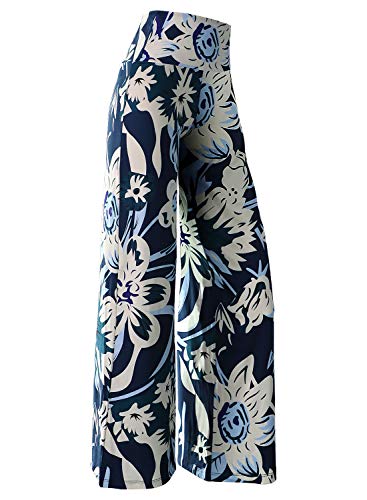
Two shirts can be the same size and still behave completely differently over palazzo pants. One stops cleanly above the gathered waistband; the other catches on it, balloons at the back and needs adjusting whenever you sit. The important difference may be the hem, fabric or shoulder shape rather than whether the shirt is labeled fitted.
Choose a top by the outline you want and the movement you need. A close knit, a relaxed blouse, a boxy shell and a long tunic can all be useful. The task is to match their proportions to the actual pants and to your own coverage preferences.
Shopping starting points
As an Amazon Associate I earn from qualifying purchases. Purchases take place on Amazon.
These are editorial shopping starting points based on listed details, not hands-on tests. Budget and Premium describe relative asking-price tiers among the featured options when researched; they do not establish product quality. Confirm the selected size, composition and current price on Amazon. How we choose examples.
Linked Amazon product image. See the exact listing for garment details.
Choose the meeting point before the neckline
Put the pants on at the position where you normally wear them. Hold up two tops with different lengths and notice where their lower edges land. One may end near the waistband, another over the upper hip. That edge creates a visible transition in the outfit, so it is a useful first decision before thinking about jewelry or neckline shape.
Do not assume a short top must expose skin. Depending on its length and the rise of the pants, it may overlap the waistband fully. Conversely, a top that appears long enough while standing may lift when you reach. Try the actual movements you expect during the day and choose the coverage that feels right to you.
If the top length is suitable but you want a different finish at the waist, visit the tucking guide. Here the decision is which top to choose; detailed full-tuck and half-tuck technique is a separate task.
Compare four useful top shapes
Top shape
Visual direction to try
Practical check
Close but comfortable knit
A clear contrast with broad legs
Movement and waistband overlap
Boxy shell or short tee
A compact upper shape without tightness
Hem position from the side
Relaxed blouse
Softness above and below the waist
Whether fabric catches or collapses at the band
Long tunic
A longer layered outline
Walking room, side openings and sitting comfort
None of these shapes is restricted to a particular body type. Compare them by the result you prefer. If the outfit feels too expansive, you can change the top's length or shoulder definition without choosing a tighter garment. If a close top feels more formal or exposed than you want, a relaxed option may better match the day.
Current retailer styling also presents several combinations rather than one compulsory formula. Long Tall Sally's wide-leg outfit feature includes different top-and-trouser directions. Treat those as ideas from a seller, not proof that one shape flatters every wearer.
Use shoulder shape to give a relaxed top definition
Look at the top's shoulder line while your arms hang normally. A more defined shoulder can make a loose body look intentional, while a dropped shoulder gives a softer outline. Either may suit palazzo pants. The question is whether the shoulder and sleeve volume are adding the kind of emphasis you want.
Compare two relaxed tops while keeping the pants and shoes fixed. A shirt with a clearer shoulder seam may feel more composed; a soft dropped-shoulder tee may feel easier and more casual. Notice what happens from the side, where sleeve bulk and the depth of the top are more visible than in a straight-on mirror view.
If you prefer volume in both pieces, keep at least one visual decision clear. That could be a deliberate top length, a limited color palette or a repeated texture. You do not have to tighten the waist to make a loose outfit feel considered.
Choose fabric behavior as carefully as fabric appearance
A top can look compatible on a hanger but behave poorly over a gathered band. Place it over the pants and move naturally. Does it skim the waistband, cling to it or get held up by its texture? Does the lower edge sit where you expect after you stand from a chair?
Structured fabric may hold a boxy shape, while a fluid blouse can follow the movement of the pants. A substantial knit may create more bulk where it overlaps the waist. Those are observations to make on the actual garments rather than conclusions to draw from a fiber name. Two cotton tops, for example, can have very different weight and construction.
The ANRABESS high-smocked-waist palazzo gives you a specific upper feature to consider: try a top that intentionally reveals that band and another that covers it. The listing names smocking and pockets, but it does not tell you how your blouse will slide over the waistband. The physical pairing remains the useful test.
Let the neckline support the rest of the outfit
Once the lower edge works, compare neckline options. A crew neck, open shirt collar, V neckline or square neckline changes the area around your face without requiring a different pant. Choose according to comfort, coverage and the accessories you want to wear. There is no need to assign a mandatory neckline to a particular leg width.
With a detailed print below, a simple neckline can leave the attention on the pants. With plain trousers, a more distinctive collar or neckline can become the main detail. If you want both, test whether they feel connected through color or style rather than assuming that two focal points are automatically wrong.
Consider the outer layer you will actually use, but keep jacket construction questions separate. A neckline that works alone should also feel comfortable beneath your chosen layer. The jacket guide addresses that outer silhouette in more detail.
Give sleeves a practical job
Sleeve length affects comfort and what you can do in the outfit. If you will cook, write at a desk or handle a bag repeatedly, choose a sleeve that does not interfere. A dramatic sleeve can be a deliberate evening feature, but it should not demand more management than you want to provide.
Try raising and extending your arms. Watch whether the entire top lifts, whether the back becomes tight and whether the neckline moves in a way you dislike. A top that appears to balance the pants while standing still may not be the right size or cut for ordinary movement.
If both the sleeves and the pants are very broad, compare a simpler sleeve while leaving everything else unchanged. You may prefer the cleaner outline, or you may decide that the combined volume is the point. This is an editing exercise rather than a rule that one part of the outfit must always be narrow.
Coordinate a top with printed pants
Begin by identifying the main colors in the print, not every tiny accent. Choose a top that repeats one color if you want a straightforward connection. It does not need to match the shade exactly; place the pieces together in daylight and decide whether the difference looks intentional to you.
For the Arolina polka-dot palazzo listing, a plain top is a useful first comparison because it lets you evaluate the pattern without another print competing. That is a styling suggestion based on the named pattern, not a claim about the exact scale or colors of every available variant. Check the selected product photograph and details.
If you enjoy mixed prints, try one shared color or a clear difference in scale. Keep the shape of the top simple enough that you can assess the pattern interaction. More detailed print combinations belong in the printed-palazzo guide; the top-selection decision here is whether you want repetition, contrast or a quieter background.
Build around texture when the colors are simple
A monochrome or near-tonal outfit can gain interest from the relationship between surfaces. You might compare a smooth top with textured pants, or choose similar textures for a softer continuous effect. Evaluate the garments in normal light, because sheen can make similar colors appear quite different.
The BTFBM rib-knit palazzo is a useful catalog example for this exercise because rib knit is explicitly named. Compare a smooth shell, a fine knit and a relaxed shirt you already own. The title does not verify the thickness or fiber percentages, so use the actual garment information before assuming how heavy the combined outfit will feel.
Do not add texture simply to make the outfit more complicated. If a plain top and plain pants already give the result you want, stop there. A deliberate lack of extra detail can be the strongest part of a simple outfit.
Test three tops with one pair before buying another
Choose three candidates from your wardrobe: one close-fitting option, one short relaxed option and one longer option. Keep shoes and pants the same. Wear each long enough to sit, reach and walk, then record one practical strength and one drawback. This makes the comparison more concrete than deciding that a top is vaguely flattering.
For example, a short tee may show the waistband clearly but lift more than you want. A relaxed blouse may give comfortable coverage but catch on the gathered band. A tunic may move well but need a different side opening. Each observation suggests a specific next choice in length, fabric or construction.
Do not buy a fourth top until you can describe the missing feature. “I need a soft hem that overlaps the waistband without catching” is a useful shopping brief. “I need something that goes with wide pants” is so broad that it can lead to another garment with the same problem.
Choose for the occasion without turning this into a uniform
A casual day and a professional setting may ask for different coverage, condition or presentation. Use those requirements to narrow the top options, then retain the shapes you enjoy. A blouse is not automatically office-appropriate, and a knit is not automatically too casual; the actual garment and workplace expectations matter.
For a specific work decision, use the business-casual guide. For broader outfit planning, return to the general styling framework. If a long kurti or another culturally specific garment is your preference, consult its dedicated styling context rather than treating all long tops as interchangeable.
Once you find a top that works, keep a photograph or short note of the successful pairing. You may discover that changing color is enough to create another outfit, or that one top works with several different pants. A useful top earns its place through wear, not through satisfying a supposed universal palazzo rule.
Frequently asked questions
What top works if I do not want to tuck anything in?
Try a top whose natural hem lands where you want the transition to occur: a short shell, a relaxed blouse or a longer tunic. Check overlap and movement. You do not need to tuck a poorly placed hem to make every top usable.
Can an oversized shirt work with palazzo pants?
Yes, if you enjoy the combined volume and the shirt moves comfortably. Pay attention to shoulder shape, hem length and color connection. A defined outline can come from those choices without making the shirt tight.
Which neckline is best with very wide pants?
There is no universal winner. Compare the neckline with your coverage preference, accessories and the rest of the outfit. A simple neckline can quiet a busy print, while a distinctive collar can give plain pants a focal point.
Should I buy a matching top for every palazzo pair?
No. First test the tops you own and identify any specific gap. A useful neutral, color echo or compatible texture may work across several pairs. Matching is an option, not a requirement for a coherent outfit.
Final Verdict
The right top is the one whose length, shape and movement work with your pants and your day. Start at the waistband, then assess shoulders, fabric behavior, neckline and sleeves. A fitted top can be effective, but a boxy shell, relaxed blouse or long layer can be equally deliberate. Test a few pieces you own with the same pants so each comparison reveals something useful. When shopping, describe the feature you need rather than searching for a universal palazzo companion. A top that stays comfortable while you sit and reach, and creates the outline you prefer, is a better choice than one that only looks convincing in a still photograph.