Best Overall

Tronjori High-waist business palazzo pants
The title identifies a Short option and high-waist business styling for a focused proportion comparison.
Exact inseam and petite rise changes need verification.
View on AmazonFit
A pair of palazzo pants can have the right waist size and still feel like too much clothing. On a shorter frame, the difficulty is often several proportions arriving together: a deep waistband, a long rise, excess hem length, and a top that covers most of the visible leg. Changing one of those relationships can make the whole outfit easier to wear.
There is no height requirement for flowing trousers, and heels are optional. The useful question is which proportions give you the amount of volume you enjoy while letting the pants sit comfortably and move freely.
As an Amazon Associate I earn from qualifying purchases. Purchases take place on Amazon.
Best Overall
The title identifies a Short option and high-waist business styling for a focused proportion comparison.
Exact inseam and petite rise changes need verification.
View on AmazonBest Budget
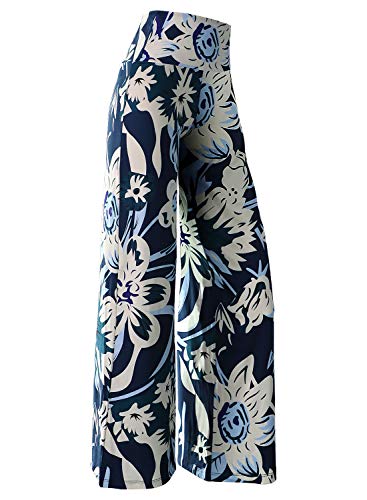
A lower observed price offers a high-waist flowing-palazzo silhouette to compare.
The title does not establish petite sizing.
View on AmazonBest Premium

A higher-priced dress-pant example with petite and regular sizing named in the title.
Adjacent wide-leg chiffon styling; no claim of superior quality or universal petite fit.
View on AmazonThese are editorial shopping starting points based on listed details, not hands-on tests. Budget and Premium describe relative asking-price tiers among the featured options when researched; they do not establish product quality. Confirm the selected size, composition and current price on Amazon. How we choose examples.
A petite label describes a brand's proportion system, not simply a smaller numbered size. Its waistband placement, rise, and other measurements may differ from the regular version. The exact changes are brand specific. Lands' End's pants chart, for example, distinguishes petite, regular, and tall measurements rather than treating inseam as the only difference. That is a reason to compare charts, not a reason to assume every petite brand follows the same rules.
You might have short legs and a relatively long torso, or the reverse. A regular rise with a shorter leg may work better than a petite cut. Conversely, taking several inches off a regular pair will not reposition a crotch that hangs lower than you want. Look at the upper portion of the pants first. Leave the hem decision until the waistband and rise are working.
Try the waistband where it naturally settles, then sit in a normal chair. If a high rise reaches your ribs or repeatedly folds when you bend, a different rise may be easier. If a lower rise slips and makes the crotch sag, seek better waist shaping instead of continually pulling the trousers upward. A waistband that moves changes the apparent length throughout the day.
High waists are a styling option, not a rule for shorter people. They can create more visible leg above the hip, but that effect is useful only when you enjoy the fit. A broad smocked band, narrow elastic casing, and flat-front waistband all draw a different boundary between top and pants. Try them with the actual tops you wear. A thick shirt tucked into a wide gathered band can feel much bulkier than a thin knit tucked into the same trousers.
Palazzo pants earn their character through generous, flowing legs. You do not have to reduce that width to wear them on a petite frame. Instead, decide whether you want a dramatic moving silhouette or a quieter version that resembles relaxed trousers. With a fluid fabric, broad legs can settle into folds; a firmer fabric may hold its width away from you. Neither result is inherently better.
Compare the front view with a side view and a few walking steps. A static photograph may show a wide rectangle while movement reveals separate legs and softer folds. If the pants feel cumbersome around furniture or stairs, choose less volume for that activity. Avoid buying the widest option solely because it carries a palazzo label. The palazzo versus wide-leg comparison explains the vocabulary; your outfit should begin with the silhouette you prefer.
Before buying a new top, try three stopping points with one you already own. Leave it loose, tuck the front lightly, and then try a full tuck. Look at how much of the trouser shape remains visible. A top that ends around the same level as a very low crotch can make the outfit read as one large block; a different hem position may separate the pieces more clearly.
A tuck is not necessary if it is uncomfortable or you prefer coverage. A shorter untucked shirt, an open overshirt, or a top with side openings can provide another arrangement. Do not roll a thick hem into a waistband and judge that lump as a problem with your proportions. For an experiment, fold the top inward temporarily while standing at the mirror. If the new length appeals, find a top genuinely cut that way rather than committing to an awkward tuck.
| What feels unresolved | Change one thing | What to watch |
|---|---|---|
| Outfit feels crowded at the waist | Try a thinner top or an untucked shorter hem | Whether the waistband remains comfortable seated |
| Trousers feel too long everywhere | Compare rise before marking hems | Crotch placement and pocket height |
| Volume seems stiff | Compare a fabric with softer drape | Movement and side silhouette |
| Jacket hides the trouser shape | Try a shorter or open layer | How the front opening frames the pants |
| Shoes disappear unpredictably | Recheck the finished length with that shoe | Walking clearance, especially behind the heel |
Take photographs at a consistent distance without a sharply tilted camera. The purpose is comparison, not an obligation to find a universally flattering angle. Keep the same shoes and top while testing two pairs of trousers. When every component changes, it becomes difficult to identify what actually improved the outfit.
For an ordinary errand day, try flowing pants, a neat untucked tee, and flat sneakers. Let the tee stop where you like the relationship between torso and leg, then set the trouser length for those sneakers. A small crossbody bag keeps the outfit practical without requiring another layer around the waist. This is an outfit suggestion, not a prescription for making yourself appear taller.
For work, combine a restrained palazzo silhouette with a soft shirt and an open jacket. The jacket can be cropped or long; the useful test is whether its width and closure work with the pants. For an evening plan, a smooth top and draped trousers can provide enough contrast without elaborate accessories. A dressier flat is just as legitimate as a heel when the hem is appropriate. Choose one area to emphasize, such as a necklace, interesting sleeves, or the movement of the trouser fabric.
Matching or similar colors can make separate garments read as a continuous outfit. If you like that effect, try navy trousers with a blue top or cream trousers with an ivory knit. Texture can keep a tonal combination interesting: a matte shirt against a softly lustrous trouser fabric, for example. You do not need an exact dye match for the colors to feel related.
Strong contrast is equally available. A pale top with dark pants draws attention to the boundary between them; placing that boundary where you want it is a styling decision. Printed palazzo pants also work on shorter frames. Judge the actual arrangement of a print rather than applying a rule about tiny motifs. A large, open pattern may look calmer than a dense small one. Repeat a color from the print in your top if you want an easy starting point.
The Tronjori high-waist business pants listed in M Short illustrate a length option worth investigating. “Short” alone does not tell you the precise inseam or whether the rise changes, so read the selected variant chart. The Alex Evenings wide-leg chiffon dress pant listed in petite and regular sizes is an adjacent dress-trouser example when the occasion calls for a softer formal look. Its listing title does not establish that every size is currently available.
A lower-priced Arolina high-waist flowing palazzo listing can be another silhouette reference, but its title does not promise petite proportions. These are ways to compare construction and sizing questions, not a ranking of which brand suits all short people. Record your required rise and finished leg length before choosing among them. That keeps a useful size option from getting lost in a long product title.
Choose the shoe you expect to wear most often before finalizing length. A hem adjusted for a tall heel can drag when you change to a flat. A platform and a pointed flat may show very different amounts of foot even when their overall height is similar. Walk, turn, and step backward during the fitting so the rear hem gets checked too.
There is no need to solve every shoe combination with one pair of trousers. You might reserve one longer pair for specific evening shoes and keep an everyday pair for flats. For exact clearance decisions, use the palazzo length guide. If the upper fit already works and only the leg is too long, a sewn hem can be a practical alteration. Avoid using a high shoe to compensate for a rise that still feels wrong.
Keep the tags attached and follow the seller's try-on conditions while assessing a new pair. Sit at a desk, put the intended items into the pockets, reach for something, and walk across the room. Check whether your shirt gathers into the waistband and whether a bag catches the fabric. These are more useful observations than whether the outfit matches a model photograph.
Then remove one accessory and try one alternative top. A simple outfit makes the pants easier to judge. If you like the broad shape but not the waistband, keep that distinction in your notes; your next search can target another construction without abandoning palazzo pants altogether. When a combination works, photograph it with the shoes visible and note any alteration. The next purchase becomes a comparison with your own successful proportions rather than another attempt to follow generalized petite styling rules.
No. Flats, sandals, loafers, and sneakers can all work. Set the trouser length for the actual shoe and check movement. Heels are an optional styling choice, not a condition of wearing wide legs.
Yes. Try an open layer, side openings, or a fabric that falls smoothly over the waistband. Judge the overall width and how the outfit moves instead of assuming that a long top is automatically wrong.
Only if the selected measurements and upper fit work for you. A cropped design may have different proportions and a different hem shape. Do not rely on the model photograph or product category alone.
Petite palazzo styling becomes easier when you separate the decisions: upper fit, leg volume, top length, and shoes. Begin with a waistband and rise that remain comfortable through an ordinary day. Then choose how much flowing fabric you want and experiment with the point where your top ends. A shorter jacket or tonal outfit may help create a look you enjoy, but neither is mandatory. Keep the hem clear with your preferred footwear and alter length only after the upper fit is settled. The successful outfit is the one you can move in and want to repeat, whether it emphasizes drama, simplicity, or relaxed coverage.