Best Overall

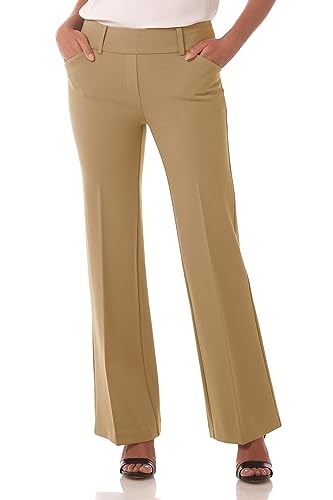
ANRABESS Smocked-waist lounge palazzo pants
A smocked-waist example for checking how an elasticated construction is measured.
The title does not provide relaxed or stretched waist dimensions.
View on AmazonFit
A size chart says waist 15 inches. Your tape measure says 30. Before concluding that the chart is wrong, check what it measures: the seller may be showing the width of the waistband laid flat, while you measured all the way around your body.
Online trouser measurements become much easier when you keep body dimensions, finished-garment dimensions and measurement methods separate. This guide walks through collecting a useful set of numbers and translating them into questions about one exact listing.
As an Amazon Associate I earn from qualifying purchases. Purchases take place on Amazon.
Best Overall
A smocked-waist example for checking how an elasticated construction is measured.
The title does not provide relaxed or stretched waist dimensions.
View on AmazonBest Budget

Lower price-tier drawstring and pleated option whose OneSize selection makes chart checking especially relevant.
OneSize is not evidence that it fits every body; confirm the recommended range.
View on AmazonBest Premium
Higher price-tier adjacent wide-leg option with multiple named fit categories to compare.
Each selected fit needs its own measurements; no sizing or quality superiority is implied.
View on AmazonThese are editorial shopping starting points based on listed details, not hands-on tests. Budget and Premium describe relative asking-price tiers among the featured options when researched; they do not establish product quality. Confirm the selected size, composition and current price on Amazon. How we choose examples.
You need a flexible tape measure, a place to write and a pair of trousers that fits in the way you want. A full-length mirror or a helper can make it easier to keep the tape level. Wear ordinary close-fitting underlayers rather than measuring over thick clothing.
Record the date, the units and what each number describes. A note saying waist 32 is incomplete if you later forget whether it referred to your body or a garment, inches or centimeters, relaxed elastic or a stretched waistband. Those distinctions matter more than collecting a large number of measurements.
Keep body measurements in one group and reference-garment measurements in another. Add the name or photograph of the reference pair. This small amount of organization prevents the most common chart mistakes before you begin comparing products.
Many charts use the natural waist, but some garments sit lower and some sellers specify another position. Read the instruction before taking the number. Do not measure at your favorite jeans waistband and assume it matches a natural-waist chart.
For a natural-waist measurement, find the waist position and bring the tape around it without compressing the body. Stand normally and keep breathing. For hips, follow the chart's instruction for the fullest area rather than choosing the point that produces the smallest number. Keep the tape level and check that it has not slipped upward at the back.
Cashmerette's body-measuring guide explains waist and fullest-hip measurements and discusses both standing and seated measurements. Its instructions are designed for its patterns. When purchasing ready-to-wear pants, follow the chosen seller's method for the chart comparison and keep any additional comfort measurements clearly labeled.
Standing and seated measurements can differ. That can be useful information when you want to understand how a non-stretch trouser must accommodate sitting. It does not mean every retailer intends you to enter the seated number into its size chart.
For example, Cashmerette specifically instructs a seated hip measurement for its Meriam trouser pattern. The instruction belongs to that pattern and its sizing system. It illustrates why method matters, rather than establishing a universal rule for all palazzo listings.
If your measurements fall between sizes, check the seller's guidance rather than inventing a size-up formula. Record both the body measurements requested and any additional information that affects comfort. Then evaluate the actual garment when it arrives. Numbers should support that evaluation, not replace it.
A stretch legging is not an ideal width reference for a loose woven palazzo. A low-rise pair is not directly comparable to a high-waist design without accounting for the different waistband position. Choose the closest garment you own in construction and intended fit.
Lay it on a flat surface, fasten it and smooth out folds without pulling it wider or longer. If the fabric has stretched during wear, note that condition. If it has recently been washed, follow its label and let it reach its normal dry shape before measuring.
You do not need the reference pair to be perfect in every area. It may have the right waist but a shorter hem than you want. Label that limitation so you use its waist measurement while making a separate length choice.
| Measurement | What to record | Common confusion |
|---|---|---|
| Waist | Flat width or circumference, with the waistband state identified | Comparing one flat width directly with body circumference |
| Hip | Width at the stated distance below the waist, or a clearly described reference point | Measuring different vertical positions on two garments |
| Inseam | Inside-leg distance from crotch seam to hem | Confusing it with total outside length |
| Front rise | Front crotch seam to the specified waistband edge | Comparing it with a full front-to-back crotch measurement |
| Back rise | Corresponding back seam measurement | Assuming it equals the front rise |
| Leg opening | Flat hem width or complete opening circumference | Using hem width as proof of thigh room |
The endpoints must match the listing method. If one chart excludes the waistband from rise and another includes it, the numbers are not directly equivalent. Ask for clarification instead of treating the apparent difference as a guaranteed fit change.
For inseam, follow the inside-leg seam from the crotch junction to the finished hem. Keep the leg smooth and record the method. A curved seam should be followed rather than replaced with a diagonal shortcut across the fabric. Do not multiply the result by two; it is a length, not half a circumference.
For front rise, measure along the front crotch seam to the waistband endpoint used by the seller. Back rise uses the corresponding back seam. A full crotch measurement travels from the front waist through the crotch to the back waist and is a different number.
If the listing gives only a total trouser length, do not subtract a guessed rise to manufacture an inseam. Outside length and inside length follow different routes. Request the actual inseam or compare with a similarly measured reference. Use the length guide to decide the hem position before treating a number as ideal.
A simple flat waistband width is often doubled to estimate its circumference, but only when the seller confirms that the figure is a half measurement and the construction supports that interpretation. A curved waistband, overlapping closure or unusual measurement route can complicate the relationship.
Consider a hypothetical chart that explicitly states relaxed flat waist width 15 inches. That corresponds to approximately 30 inches around when interpreted as a simple half-waist measurement. It does not mean the garment is intended for only one 30-inch body waist, especially if elastic or design ease is involved. You still need the seller's sizing guidance.
In contrast, a 29-inch inseam stays 29 inches. A front-rise figure also remains a single length. The instruction to double applies to an explicitly identified half-width, not to every number in the chart.
A body chart usually maps your measurements to a recommended size range. A finished-garment chart tells you about the dimensions of the product itself. A loose trouser generally needs space beyond the body in relevant areas, while some stretch designs are constructed differently. You cannot interpret both chart types in the same way.
Seamwork explains ease as the difference between body and finished-garment measurements. For a simple hypothetical example, a 44-inch garment hip circumference compared with a 40-inch body hip circumference leaves 4 inches of positive ease. That arithmetic describes the difference; it does not establish that 4 inches is the correct target for every palazzo pattern.
Do not add an arbitrary allowance to your body measurements before using a chart that already tells you which body size to select. The maker may already have incorporated the intended ease. First identify the chart type, then follow its instructions.
A relaxed elastic measurement tells you the band before stretching. A stretched figure tells you what was measured under some amount of extension, which may not be defined. Maximum possible expansion is not the same as a comfortable wearing circumference.
Ask whether the seller supplies a recommended body range and whether a drawstring, fixed front or smocked panel changes the fit. Avoid buying solely because your measurement falls below a maximum. You still need the waistband to feel comfortable and remain in place during ordinary sitting and walking.
The catalog's ANRABESS high-smocked-waist palazzo pants and Made By Johnny WB1484 pleated drawstring pants have different named waist treatments. Their titles do not establish matching stretch ranges or body-size recommendations. Use each exact listing's chart rather than transferring a comfortable size from one to the other.
Confirm the color, size, length option and model. A general brand chart may not answer a question about a particular short or tall version. A parent listing can also contain several choices whose titles and images need careful checking.
Rekucci regular, petite and tall wide-leg pants explicitly names multiple fit categories, but the catalog title does not give their numerical differences. Compare the exact selected option. Do not import measurements from another Rekucci model just because the brand and broad silhouette match.
If your waist and hips point to different sizes, record that mismatch as useful information. It may suggest a different cut or a possible alteration, rather than automatically choosing the larger or smaller label. Our fit guide addresses the next diagnostic step without turning measurement technique into a universal sizing formula.
Instead of asking whether the pants run small, ask for a specific measurement and method: for the selected size and color, what is the relaxed waistband circumference, and is the listed length an inseam? If rise is the issue, ask whether the measurement includes the waistband.
Keep the reply with your measurement record. When the garment arrives, compare it using the same method and evaluate how it wears before removing tags or altering it. A small measuring difference can come from technique; a persistent mismatch deserves a clear question rather than a guessed explanation.
Your record becomes more useful with each successful pair. It links numbers to a real garment and a real preference, making future online choices less dependent on uncertain size labels.
Both can help, but they answer different questions. Body measurements belong with a body-size chart. A reference garment helps compare finished dimensions such as inseam and rise. Keep the two sets labeled and do not substitute garment numbers into a body chart without understanding its instructions.
Only if the seller clearly identifies it as a flat half-waist width and the measurement method supports that conversion. Some charts already show circumference or body ranges. Never double an inseam, front rise or outside length merely because other numbers are flat widths.
Check the maker’s guidance and the garment construction. A different cut may fit the relationship better, or a targeted alteration may be appropriate. Do not assume choosing one size solves both areas. Use the numbers to identify the mismatch, then assess actual fit.
Use it only as a clearly limited reference, not as the specification for the pair you are buying. Similar names can hide different rises, waist treatments and length options. Request the exact model’s measurements when the available chart does not identify the selected garment.
A useful measurement record keeps methods visible: body or garment, flat width or circumference, relaxed or stretched, front rise or full crotch length. Take the numbers carefully, but spend equal attention on what the seller’s chart actually represents. A well-fitting reference pair provides context, while the selected model’s instructions determine how to compare. Avoid guessed conversions, automatic size changes and specifications borrowed from similar listings. When information is missing, ask one precise question. Once the pants arrive, confirm both the dimensions and the wearing experience. That combination makes online sizing more dependable without pretending that a chart can guarantee every aspect of fit.