Best Overall
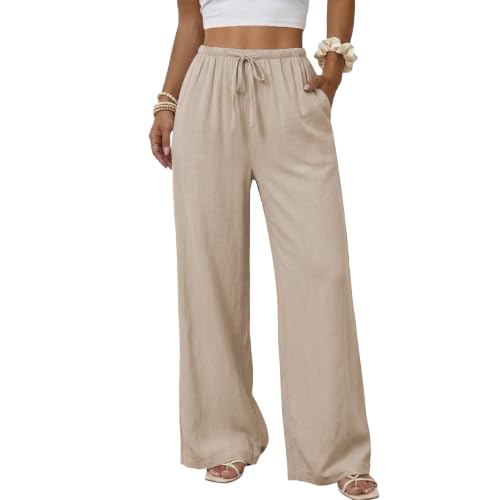
Duyang Cotton-linen drawstring palazzo pants
Drawstring and elastic features offer an adjustable construction to investigate after checking hip fit.
No maximum waist-opening measurement verified.
View on AmazonFit
“Pear-shaped” is useful only if it helps describe a clothing problem. Here, it means your waist is relatively smaller than your hips, so pants that accommodate the hips may leave a gap at the waist. It does not identify your height, clothing size, preferred style, or the amount of leg volume you should wear.
Palazzo pants can offer generous space through the leg, but their upper cut still matters. This guide focuses on the waist-to-hip relationship: how to evaluate it, what to compare online, and when a different waistband or a limited alteration makes sense.
As an Amazon Associate I earn from qualifying purchases. Purchases take place on Amazon.
Best Overall
Drawstring and elastic features offer an adjustable construction to investigate after checking hip fit.
No maximum waist-opening measurement verified.
View on AmazonBest Budget

Lower-priced pleated drawstring example for comparing waist adjustment.
The selected OneSize listing requires especially careful dimension checking.
View on AmazonBest Premium
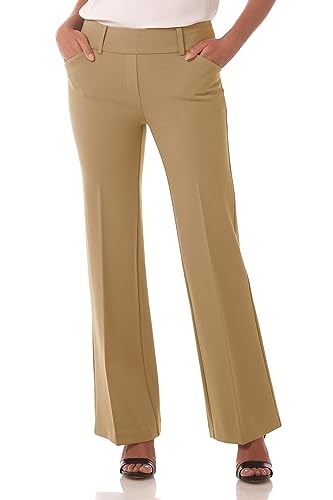
Higher-priced pull-on option naming regular, petite, and tall fits.
Adjacent wide-leg trousers; no verified special waist-to-hip ratio.
View on AmazonThese are editorial shopping starting points based on listed details, not hands-on tests. Budget and Premium describe relative asking-price tiers among the featured options when researched; they do not establish product quality. Confirm the selected size, composition and current price on Amazon. How we choose examples.
A waist-to-hip difference can occur across many clothing sizes. Use actual measurements rather than assuming a curvy, regular, or plus label will supply a particular ratio. Follow the chart's instructions for where to measure. Some sellers publish body dimensions, others finished garment dimensions, and some provide both; those are different kinds of information.
Lands' End's pants chart is one example of a retailer specifying waist, hip, and inseam methods. Use it to understand why consistent methods matter, not to convert its sizes automatically to another brand. Record the measurements without pulling the tape tighter to reach a preferred number. If you compare a well-fitting garment, measure it separately and label those notes as garment measurements. The measurement guide covers that process in detail.Suppose your waist corresponds to one size and your hips to a larger size in the same chart. That tells you the brand's standard relationship differs from yours. It does not mean your measurements are wrong or that you must accept a tight hip. Check whether the product has an adjustable waist, a shaped band, or a cut specifically offering a different relationship.
Do not average the two size labels mathematically. A middle size might still be too tight at the hips while remaining loose at the waist. Ask for actual garment measurements when the information is missing. A stretchy waistband also needs enough opening capacity to pass over the hips on a pull-on garment. Its relaxed circumference is only one part of that question. For a zippered style, the opening behaves differently, so compare construction as well as chart numbers.
Put the pants on with empty pockets and let the waistband rest without a tight belt. Look for fabric that moves away from the hips into the leg. Sit and take a longer step. If the upper leg binds or the seat pulls down on the back waistband, the dramatic hem is not solving the upper fit.
Closet Core's fitting resource recommends checking movement and distinguishes different pattern adjustments rather than treating every wrinkle as the same problem. Here, the useful lesson is to observe where the garment needs room. Do not attempt a detailed crotch alteration from one mirror symptom. If the hips feel comfortable but the waistband clearly stands away, keep that distinction: the lower size may already be right, and the upper shaping may be the part to change.A gap at the center back may reflect waistband shape, extra circumference, or how the garment balances over the seat. A gap that appears only when you bend is different from a band that stands away all the time. Try sitting and walking before deciding how much excess exists. Holding a large pinch at the back while standing can exaggerate the amount you should remove.
A belt is useful for a small amount of adjustment if it stays comfortable and the gathered fabric looks intentional to you. If tightening it drags the side seams backward or creates a thick bunch under your shirt, a more shaped waistband may be easier. Do not simply fold the whole band down to make it grip; that changes the rise and pocket position. The waist alteration guide explains the distinction between adjusting circumference and rebuilding the upper fit.
| Option | Why it may help | Limit to investigate |
|---|---|---|
| Drawstring with elastic | Allows a larger opening to be adjusted at the waist | Gathering and knot bulk |
| Contoured fixed waistband | Can follow a change in circumference through its depth | Its shape must match your preferred waist position |
| Flat front with elastic back | Combines a defined front with some adjustment | Back elastic does not guarantee hip room |
| Full smocking | Offers flexible gathering across a broad area | Band depth and elastic firmness |
| Tailored waist alteration | Can address a localized gap on an otherwise successful pair | Seams, pockets, and fastening may limit the change |
There is no universal winner. If you like an untucked smooth top, a bulky drawstring knot may be inconvenient. If you value easy adjustment, that same tie may be exactly the useful feature. Evaluate the construction in the outfit where it will be worn.
A pocket opening that spreads outward deserves attention, but it is not a definitive diagnosis on its own. Empty the pocket, check the bag inside, and see whether the adjacent fabric also feels tight. Some pocket designs sit away from the body by construction. Others pull open because the surrounding area lacks room.
Pleats are similarly individual. They may release immediately below the waist or remain stitched for a distance. If the closed portion is pulled taut over your hips, seek another size or a different pleat arrangement. Avoid assuming that all pleats add unwanted width or that a flat front always sits more smoothly. The location where fabric is released is more informative than the label. Try the pants with your hands out of the pockets so the pose does not hide their natural behavior.
Fluid palazzo fabric can fall in folds from the hips; a structured fabric may preserve a stronger outline. You can choose either. A larger hip measurement is not a reason to eliminate volume, prints, light colors, or visible pockets. Decide whether you want the pants to move softly or form a deliberate broad shape.
When comparing pairs, keep the top and shoes the same. Look from the side and walk rather than judging only a front-facing photograph. If a lining is present, check that it allows the same movement as the outer fabric. The title “linen” or “chiffon” does not prove the finished garment's softness, coverage, or hip ease. Read composition and construction details separately, then judge the actual fit. A different fabric can change the effect even when the pattern dimensions are similar.
The Duyang cotton-linen palazzo listing names a drawstring, elastic waist, and pockets. Those are relevant features when you want to investigate adjustability after fitting the hips. The title does not establish the fiber percentages, the maximum waist opening, or whether its chart matches your proportions.
The Made By Johnny WB1484 pleated palazzo listing combines pleats and a drawstring, but the selected title says OneSize. Treat that as a prompt to verify dimensions, not as an assurance that it fits every waist-to-hip relationship. For a different construction direction, the Rekucci pull-on stretch wide-leg office pant names several length-fit categories. It is an adjacent wide-leg alternative; its shaping-oriented product name does not establish a suitable hip ratio or a comfort result.
Choose a top because it suits your activity and the silhouette you enjoy. If you like waist definition, a tuck or shorter hem can reveal the band. If you prefer a continuous line over the waist, try an untucked shirt that has enough room to clear the hips. An open jacket provides another way to frame the pants without forcing a particular top length.
You do not need exaggerated shoulders to “balance” your hips. A simple tee, a soft blouse, or a fitted knit can all work. If a longer top catches over the waistband, investigate its width or fabric rather than blaming the trousers automatically. Try sitting with all layers in place. The outfit should allow movement at both the trouser waist and the top's lower edge, particularly when several garments overlap near the hips.
A pair that fits comfortably through the hips and needs a modest, localized waist correction may be worth discussing with a tailor. Bring the intended underwear and explain where you want the waistband to sit. Ask whether the change affects pockets, a zipper, darts, or belt loops, and request a basted fitting before excess fabric is removed when practical.
If the pants pull through the seat, have an uncomfortable rise, and gap at the waist simultaneously, a simple take-in may not be the economical answer. Compare another cut before paying to reconstruct several areas. Save notes about the successful hip fit, even if that particular waistband did not work. Over time, those observations can help you identify useful construction features more reliably than a broad body-shape label. The aim is fewer compromises, not a standardized silhouette.
Use the exact chart and construction. When a fixed garment fits the waist but restricts the hips, a larger hip fit with an adjustable or altered waist may work better. Do not assume stretch resolves the mismatch.
No. Their position, release point, fabric, and available room matter more than the presence of pleats. Check whether they move comfortably rather than following a ban on the detail.
No. Waistband contour, total circumference, and the balance over the seat can contribute. A tailor can assess whether darts, a seam adjustment, or a different waistband is appropriate.
Use the waist-to-hip relationship to ask better clothing questions, not to restrict your style. Give the hips and seat comfortable room, check the opening on pull-on pants, and then solve any remaining waist gap through suitable shaping or adjustment. Pay attention to how pockets and pleats behave without assuming they are automatically wrong for you. Tops, prints, and leg volume remain matters of preference. A useful pair lets the upper fit and flowing silhouette work together, with an alteration only where the construction can support it. Keep the measurements and model details from successful fits so future choices become more precise.