Best Overall

Arolina Stretchy lounge palazzo pants with pockets
Optional lounge-palazzo example with pockets explicitly named in the listing.
The retrieved title does not establish rayon content or washing instructions.
View on AmazonCare
A pair of wide, fluid pants can take up surprisingly much room in a washbasin. The awkward moment comes when you lift them: the waistband is in your hand, both legs are still wet, and there is nowhere ready to put them. Planning that transfer matters as much as choosing a wash cycle.
For rayon or viscose palazzo pants, begin with the sewn-in care instructions and prepare the drying space before adding water. Some garments permit machine washing; others require a different process. This guide helps you organize the permitted treatment without assuming that every fabric with the same fiber name behaves alike.
As an Amazon Associate I earn from qualifying purchases. Purchases take place on Amazon.
Best Overall
Optional lounge-palazzo example with pockets explicitly named in the listing.
The retrieved title does not establish rayon content or washing instructions.
View on AmazonBest Budget
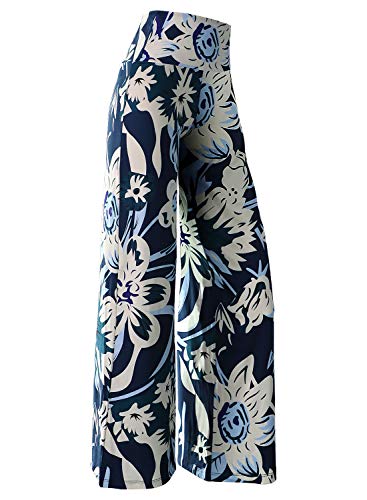
Lower observed price-tier example of a flowing wide-leg palazzo silhouette.
No verified fiber percentages or care label were returned.
View on AmazonBest Premium

Higher-priced optional palazzo alternative described as stretchy for comparison.
Price tier is not evidence of better wash durability or confirmed rayon composition.
View on AmazonThese are editorial shopping starting points based on listed details, not hands-on tests. Budget and Premium describe relative asking-price tiers among the featured options when researched; they do not establish product quality. Confirm the selected size, composition and current price on Amazon. How we choose examples.
Find both the composition label and the care label. They answer different questions. The first tells you what fibers are declared; the second tells you how the finished garment should be treated. A rayon-rich shell may sit over a different lining, while an elastic waistband, decorative finish or attached trim can introduce another care requirement. Read the entire instruction rather than stopping at the familiar word rayon.
GINETEX explains that care instructions account for the whole article, including finishes and accessories. That is why advice for a fabric sample cannot automatically become a washing method for your pants. If the garment says not to wash, a basin is still washing; gentle hands do not turn a prohibited process into an approved one.
When the label is missing, ask the maker with the style number and clear photographs. A product description for another color or an older version is a clue to investigate, not a replacement label. If the pants are valuable to you, a professional cleaner can assess them before you make an irreversible experiment.
| Information to find | What to decide before starting | Common incomplete decision |
|---|---|---|
| Wash permission and process | Use the permitted hand or machine method | Reading only the temperature |
| Bleach restriction | Check the actual detergent and stain product | Assuming a mild-looking bottle contains no bleach |
| Drying instruction | Prepare the correct rack, surface or machine setting | Washing first and improvising later |
| Finishing instruction | Reserve time for any permitted pressing | Increasing dryer heat to remove wrinkles |
A label-led plan is especially useful in a shared laundry room. Put the pants in a clearly identified load and tell anyone helping which part of the process is different. A small note on the basket can prevent a carefully chosen wash from ending in somebody else's routine dryer cycle. Photograph the label while it is readable so you do not need to decipher a wet tag later.
Empty pockets completely, including tissues and receipts. Check the inside of a deep pocket with your hand rather than merely shaking the pants. Close any fastenings as appropriate for the garment and keep long drawstrings from tangling according to their construction. Inspect a loose hem or opening seam before washing; laundry is a poor time to discover that an existing tear was wider than it looked.
Choose companions by their allowed treatment, color and physical character. A pair of delicate flowing trousers does not need to share a crowded load with rough hardware or heavily soiled work clothes. Washing the pants separately for an initial care check is a reasonable organizational choice, particularly when you want to observe how their color and dimensions respond.
Measure only what you will actually compare afterward: a relaxed waist, the inseam of each leg and perhaps the flat hip width. Use the same surface and measuring method later. These notes will not predict shrinkage, but they give you a better reference than a memory of where the hem fell with a different pair of shoes.
Use a clean basin with enough space to reposition the garment without a tight knot of fabric. Select the label-compatible water temperature and dose a suitable detergent according to its instructions. Mix it into the water before lowering the pants. Think of the task as a brief, controlled wash, not an unattended overnight soak.
Viscose producer Asia Pacific Rayon recommends gentle washing, mild detergent and careful water removal in its general viscose guide. Apply that broad advice only within your garment's instructions. Move the fabric gently, pay attention to soiled areas without brushing them aggressively, and rinse as needed to remove detergent. A stubborn mark does not justify escalating to a harsher chemical on the spot.
Support a substantial portion of the fabric when lifting it from the water. Gather the legs onto your hands or a supporting towel so that the entire wet garment is not dangling from one narrow section. Keep a clean landing area beside the basin. That simple arrangement makes it easier to avoid twisting, dragging a hem across the floor or dropping the pants into a dirty sink.
Read the machine's program descriptions if you are unsure what its names mean. A button labeled quick is not automatically the gentlest option; speed and mechanical treatment are separate choices. Likewise, a laundry bag can help contain a garment, but it does not authorize a cycle the care label excludes. Give the bag enough room for the pants instead of forcing them into a tiny pouch.
There are real exceptions to blanket rayon rules. EILEEN FISHER's S6TKO-P4657 wide-leg pant specifies a viscose-rich blend and permits a cold machine wash and low tumble drying. That is an example of one engineered finished garment, not permission to copy those instructions onto an unrelated rayon palazzo.
Before starting, check the displayed temperature, cycle and any drying option separately. Shared machines sometimes retain the previous user's settings. When the wash ends, take the pants to the drying arrangement you prepared instead of leaving the load compressed while you decide what to do next.
Lay-flat, line-dry and tumble-dry instructions describe different arrangements. Follow the one your label provides. Where flat drying is required, use a clean surface that supports the legs without folding them into a dense wet pile. Arrange seams naturally and let the fabric rest without trying to pull it into a larger size. Where hanging is permitted, choose support that does not concentrate all the weight on an easily marked edge.
Check the waistband, pockets and overlapping folds when assessing whether the pants are dry. The open leg panel may feel ready while a thicker gathered area still feels damp. Leave room around the garment so that you can reach these areas without dragging it against other laundry. Do not put a partly dry pair into a drawer merely because the visible front looks finished.
Keep routine washing separate from shrink recovery. If the pants look shorter or narrower, let them finish drying and consult the rayon shrink-assessment guide. Pulling hard while they are wet is not a necessary step in ordinary care.
A food splash, oily mark and unknown discoloration may call for different treatment. Identify the mark when possible, then read the stain product's fabric restrictions as well as the pants label. Test only where the product instructions permit, in an inconspicuous area, and allow the test to dry before deciding that the appearance is unchanged.
If the pants have a contrasting print, test the relevant colors rather than assuming one hidden pale section represents every dye. Avoid cycling through several remedies in succession; it becomes difficult to tell which treatment caused a new ring or texture change. Tell a cleaner what was applied, even if the experiment seemed harmless. That information is more useful than presenting the mark as untouched.
A useful purchase question is whether you have room to dry a broad-legged garment in the prescribed position. Someone using a small shared bathroom may value a clearly washable style differently from someone with a large drying rack. Ask for the actual composition and care information before buying; neither softness language nor a flowing photograph proves a particular laundry method.
The Arolina lounge palazzo with pockets and Rekucci Travel in Style palazzo illustrate two catalog silhouettes you might compare. Their retrieved titles support lounge pockets and a stretchy palazzo description respectively; they do not verify rayon content or a shared care routine. Treat them as optional shopping examples, not as the subjects of the washing instructions above.
For your existing pair, keep a short record after the first successful wash: the selected program, drying arrangement and any finishing needed. A repeatable routine is easier to maintain than a long collection of conflicting tips. If appearance changes unexpectedly, preserve that record and the label photograph before seeking advice.
Some can. The finished garment label must permit it, and the cycle, temperature and drying instructions still need to be followed. A blend percentage alone cannot tell you whether the lining, color or waistband tolerates the same treatment.
Use a bag only when compatible with the care instructions, and choose one that contains the pants without crushing them into a hard bundle. The bag is an aid to handling; it does not make a prohibited machine cycle acceptable.
Do not judge the final result while they are wet or start stretching them to correct it. Complete the specified drying process, then compare the dry garment with your notes. A persistent change deserves its own assessment.
No. The shopping examples show available silhouettes, while the care process belongs to the pair you own. Confirm its label even if another product has an almost identical title or photograph.
A manageable rayon-pants routine begins before the water runs: read every care instruction, organize a compatible wash and prepare the drying space. The most useful habit is supporting the broad garment through each transfer, then checking the finished result when it is dry. Avoid turning a first wash into a series of stain, shrink and wrinkle experiments. If the label is unclear, a clear photograph and an exact style reference give the maker or cleaner something concrete to assess. Keep the method that works for this pair, and evaluate any replacement on its own care requirements rather than the word rayon alone.