Best Overall

Arolina Stretchy lounge palazzo pants with pockets
A lounge construction example with title-supported stretch and pockets for a practical comparison.
No rayon or polyester percentage is verified from the catalog title.
View on AmazonMaterials
Rayon and polyester palazzo pants can look remarkably similar in a product photograph. Both can appear smooth, fluid and suitable for a long, wide leg. The useful distinction emerges when you read the composition, examine the construction and decide how you want the garment to behave in your wardrobe.
This comparison should not turn into a claim that every rayon pair is cool and delicate or every polyester pair is hot and indestructible. Those shortcuts overlook blends, linings and finishing. Instead, use the fiber names to ask better questions about the particular trousers you are considering.
As an Amazon Associate I earn from qualifying purchases. Purchases take place on Amazon.
Best Overall
A lounge construction example with title-supported stretch and pockets for a practical comparison.
No rayon or polyester percentage is verified from the catalog title.
View on AmazonBest Budget
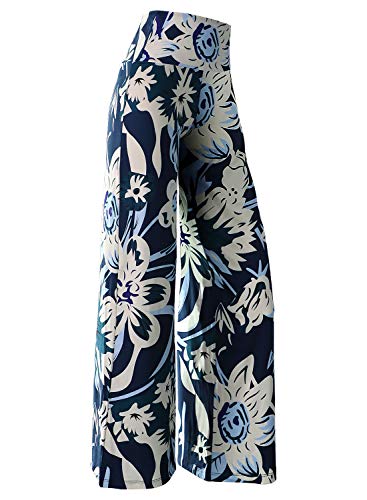
A lower-priced Arolina flowing palazzo example when comparing casual silhouettes.
Its material and care must be checked; no fiber-performance ranking is implied.
View on AmazonBest Premium

A higher-priced satin-titled alternative for shoppers considering a dressier surface.
Satin does not identify fiber, and this is not verified silk or polyester.
View on AmazonThese are editorial shopping starting points based on listed details, not hands-on tests. Budget and Premium describe relative asking-price tiers among the featured options when researched; they do not establish product quality. Confirm the selected size, composition and current price on Amazon. How we choose examples.
Rayon and polyester are not two names for the same material. Fiber producer Lenzing describes viscose, modal and lyocell production from cellulose, with different manufacturing processes. Polyester belongs to the synthetic polymer group identified in CottonWorks' fiber overview. These distinctions establish material categories, not a ranking of finished pants.
In shopping, you may encounter viscose where you expected rayon, or a branded fiber name alongside the generic composition. Read all percentages and keep the terms attached to the product. Avoid treating a branded family as if it always meant one specific fiber. If the composition is incomplete, ask the seller rather than filling the gap with a familiar description.
A rayon-rich knit and a woven polyester trouser differ in more than fiber. So do a lined evening pair and an unlined lounge pair. To understand what you prefer, try to compare similar silhouettes and inspect whether the main fabric is woven or knitted. The same word crepe can appear in very different constructions.
Look at the waistband independently. Pull-on elastic, smocking and a fitted band create different experiences even when the leg fabric looks similar. An uncomfortable waist does not prove that a fiber is unsuitable for you. Likewise, a loose leg can feel appealing while the seat remains too close for comfortable sitting. Keep fit observations separate from material observations.
With a garment in hand, lift a small section without stretching it and let it fall. Observe whether the fabric forms fine folds, broad folds or a more defined shape. Then examine it while standing naturally. This is a practical way to identify the appearance you like, not a standardized test of rayon versus polyester.
For online shopping, movement photographs can be useful, but consider how the garment is being posed. A model holding the hem outward demonstrates available width. It does not show whether the fabric hangs close to the body on its own. Compare front, side and rear views when available, and do not infer a luxury fiber from a glossy finish.
| Decision | What to examine | What to avoid assuming |
|---|---|---|
| Flowing silhouette | Natural folds and movement | All rayon drapes identically |
| Ease when seated | Fit, construction and stretch | An elastic waist means stretchy legs |
| Warm-weather comfort | Whole garment, lining and room | Polyester content alone predicts discomfort |
| Travel readiness | Care instructions and your crease tolerance | Polyester means wrinkle-proof |
| Simple laundry | Selected garment label | Rayon always requires hand washing |
Breathable, moisture-wicking and quick-drying describe different claims. A product can use one term without establishing the others. If these properties are important, look for information about the finished fabric or garment rather than relying on fiber percentages alone. A seller's claim should remain identified as a seller's claim unless independent testing is available.
For a personal comparison, think about where you will wear the pants and what else you will wear underneath. A close lining changes the experience of a loose outer leg. A waistband covered by several layers may feel less comfortable than the open lower section. The hot-and-humid-weather guide develops that complete-garment approach without promising a universal cooling fabric.
A composition containing elastane or spandex gives useful information, but the amount listed does not by itself tell you the usable stretch of the finished garment. Construction and fit still matter. You may also encounter a fabric that stretches through its structure without an elastic-fiber percentage. Read any stretch description in context.
When trying on pants, sit, stand and bend naturally, then observe whether the shape remains comfortable. Do not repeatedly pull a delicate fabric to test its limits. Your goal is to decide whether the garment accommodates normal movement, not to damage it. If a waistband needs constant readjustment or the knees retain a shape you dislike, document the specific problem rather than condemning the entire fiber category.
A useful counterexample is the EILEEN FISHER Washable Stretch Crepe Wide-Leg Pant. The maker lists a viscose-rich knit blend and permits cold machine washing and low tumble drying. That particular construction shows why all-rayon care rules are unreliable; it does not authorize the same treatment for another viscose garment.
Compare the actual labels before choosing between candidates. Consider whether you have space for the required drying method and whether professional care would fit the garment's likely use. A pair bought for frequent wear should not depend on a routine you are unwilling to follow. Save the label information before removing a tag that might later become difficult to read.
A synthetic composition does not eliminate restrictions from trim, lining, color or finish. GINETEX's care principles address the whole article. Use the garment's permitted treatments, including its ironing guidance, instead of transferring a setting from another pair that happens to share a fiber.
Think about the maintenance result you want. Some shoppers are comfortable with small travel creases; others want a smooth finish before each wear. That difference can matter more than an unqualified wrinkle-resistant phrase. If the product offers no care information before purchase, treat that as a missing detail to resolve, especially when the pants have pleats, a reflective surface or decorative components.
Manufacturer examples make the distinction more concrete. These are reference garments with published specifications, not confirmed matches to the Amazon examples above.
| Reference garment | Maker-listed construction | Decision it helps you make |
|---|---|---|
| EILEEN FISHER S6TKO-P4657 | Textural knit: 70% viscose, 24% recycled nylon, 6% elastane; ankle length; cold machine wash and low tumble dry permitted | A construction to investigate if a stretch knit and those laundry options suit you |
| ANRABESS A1965 | 100% polyester main fabric described as nonstretch; smocked high waist, ankle length; cold machine washing in a laundry bag | Compare the nonstretch leg fabric with the flexible waist instead of assuming the whole garment stretches |
The useful contrast is stretch-knit construction versus a nonstretch main fabric with an elasticized waist. Both happen to be ankle-length references; neither represents every rayon or polyester palazzo. Choose the construction that suits your movement and maintenance needs, then assess its actual fit. These specifications cannot rank their relative cooling, opacity or durability.
The Arolina stretchy lounge palazzo listing identifies stretch and pockets, so it can help you compare a casual construction. Its observed title does not identify rayon or polyester percentages. We therefore do not use it as proof of a rayon-versus-polyester performance result.
The TYHOTULY satin palazzo listing offers a dressier surface category, but satin is not a composition statement. It is a relevant example for someone comparing casual and polished looks, provided they inspect the full listing. The shopping examples here are optional starting points; none is necessary to understand the material decision.
For an office day, think through the commute, the seated hours and how the pants look when you stand again. For travel, consider whether you need to clean them away from home and how they fit with your packing plan. For an event, give surface appearance and comfortable movement attention without assuming that a higher price establishes better fiber content.
Write one potential drawback beside each option. It might be uncertain lining, a care method you dislike, a waistband that seems bulky or insufficient information about the selected size. A concrete drawback is easier to assess than a vague feeling that a fiber is good or bad. If one missing fact would determine the purchase, obtain that fact before moving on.
You do not need a scientific verdict on every textile to make a sensible purchase. You need enough reliable information to decide whether the pants suit your intended use. If you prefer the movement of a particular rayon-rich garment and can follow its care, that is a reasonable choice. If a polyester garment meets your appearance and maintenance needs, it can be reasonable too.
Keep performance language proportional to the evidence. Softness, comfort and crease tolerance are partly personal, while composition and allowed care are factual details to verify. The strongest choice brings those two sides together. A garment that looks right but leaves several crucial questions unresolved is not yet a better option than a less dramatic pair with clear, suitable specifications.
Viscose is part of the manufactured cellulosic fiber landscape commonly encountered under rayon terminology. Read the exact composition and do not assume that every cellulosic fiber or branded family behaves identically. The finished fabric construction and care label remain essential.
No. You cannot rank an entire garment's comfort from that fiber name alone. Examine weight, construction, lining and room around the body. If specific moisture or drying performance matters, seek evidence for the actual fabric rather than a blanket category claim.
Some can, as particular manufacturer instructions demonstrate. Others require a different method. The example in this guide is not permission to machine wash your own pair. Follow the care label for the selected garment, including its drying instructions.
No. Satin describes a weave or surface category in product naming, while silk is a fiber. A satin-titled listing needs a separate composition check. The silk-versus-satin guide explains how to read those descriptions without confusing appearance with material.
Choose between rayon and polyester palazzo pants by comparing complete garments. Fiber composition gives you a useful starting point, but construction, lining, fit and care determine whether the pants make sense for your life. Avoid rewarding a listing for broad performance words that it does not substantiate. Instead, resolve the few details that would actually change your decision: the permitted washing method, the presence of a lining, the amount of room when seated and the surface you prefer. Either category can supply a suitable option when its specific features match your priorities and the information is clear.