Best Overall

Made By Johnny WB750 palazzo lounge pants
Optional WB750 lounge-palazzo model to compare if an existing garment cannot be made wearable.
No verified rayon composition or shrink-resistance evidence in the returned title.
View on AmazonCare
The hems look higher, the pockets sit differently, and the waistband feels less forgiving. It is tempting to search for a soak that will put everything back. First establish what changed. A shorter inseam, a twisted leg and a lining that now hangs below the shell are three different problems, even when they appear after the same wash.
There is no dependable home recipe that restores every shrunken rayon garment. The useful goal is a careful assessment: preserve the pants, document the change, decide whether expert finishing or alteration is plausible, and stop before an attempted rescue creates a second problem.
As an Amazon Associate I earn from qualifying purchases. Purchases take place on Amazon.
Best Overall
Optional WB750 lounge-palazzo model to compare if an existing garment cannot be made wearable.
No verified rayon composition or shrink-resistance evidence in the returned title.
View on AmazonBest Budget
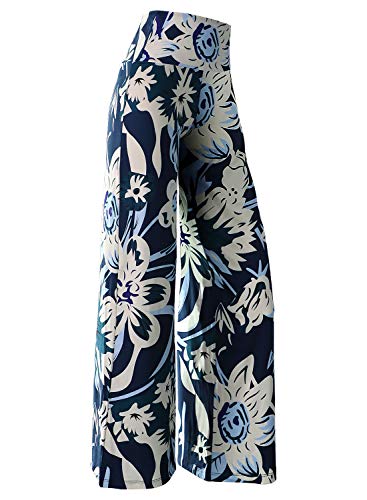
Lower observed price-tier flowing palazzo example for a replacement shortlist.
It is not a shrink-proof recommendation and its care label must be checked.
View on AmazonBest Premium

Higher-priced Starfish high-rise palazzo model offers another clearly named model family to investigate.
A higher price does not establish recoverability or superior laundering performance.
View on AmazonThese are editorial shopping starting points based on listed details, not hands-on tests. Budget and Premium describe relative asking-price tiers among the featured options when researched; they do not establish product quality. Confirm the selected size, composition and current price on Amazon. How we choose examples.
Start with the pants on a clean, flat surface, fully dry and arranged without tension. If they have just come from the wash, resist the urge to pull them to a remembered length. A wet appearance is not a sound baseline for deciding the finished dimensions. Separate observations from explanations: “the left inseam measures less than my earlier note” is evidence; “the dryer ruined every fiber” is a conclusion you may not be able to support.
Look for an overall size change, uneven change, altered texture and construction problems. A rolled elastic casing can make the waist feel tighter without proving that the entire fabric shrank. A newly visible lining can suggest the layers no longer hang together. A seam that spirals toward the front suggests more than a simple shortage of hem length. Each observation changes which person or process is likely to help.
If you have no earlier measurements, compare how the pants sit with the same waistband position and footwear you used before. That comparison is less precise than a measured record, but it is better than comparing one outfit photograph taken in heels with another taken barefoot.
| Check | Record without stretching | Why it helps |
|---|---|---|
| Both inseams | Measure from the same seam junction to each hem | Distinguishes even shortening from unequal legs |
| Waist and hip | Note relaxed garment dimensions and current comfort | Shows whether the issue extends beyond length |
| Shell and lining | Photograph their relative hems | Gives a cleaner or tailor a visible layer comparison |
| Seams and surface | Photograph puckering, shine, tearing or changed texture | Prevents a length-only rescue from overlooking damage |
Use one unit throughout and write down exactly where the tape starts. Do not invent an original measurement by copying a size chart: a chart may describe body dimensions, another size or a different measuring method. If you have a purchase screenshot with actual garment measurements, keep it, but identify it as seller information rather than your own before-care measurement.
Add the wash program, water setting, detergent, drying method and any ironing that followed. Where you do not know, write unknown. A shared-household wash does not become easier to diagnose when a guess is presented as certainty.
Rayon is not a promise that two finished pants have identical care behavior. Construction, other fibers, lining and finishing can differ. For example, the maker of EILEEN FISHER's S6TKO-P4657 viscose-rich stretch-crepe pant permits specific machine washing and drying. That evidence challenges a universal ban on washing all viscose; it says nothing about whether an already altered, unrelated pair can be restored.
Read your own label even if you think you remember it. Words such as reshape, wash separately or no steam may be on another side of the tag. The label is also relevant when asking for professional help, because a cleaner needs to consider the entire garment instead of applying a generic rayon treatment.
It is reasonable to suspect that the last care process contributed when the change appeared immediately afterward. It is less reasonable to claim an exact shrink percentage or identify the responsible stage without a controlled comparison. Preserve the timeline and let the evidence determine how confident you can be.
A recipe involving conditioner, baby shampoo, long soaking and pulling may sound reassuring because the steps are specific. Specificity is not proof that the recipe suits your pants. You would still need to know whether wetting is allowed, whether the product is compatible with the dyes and finish, and whether the garment can be handled that way without changing its proportions.
A temporary increase in one measurement does not establish a successful repair. The knees might become baggy, the side seams might drift, or the trousers might return to their altered dimensions after the next permitted cleaning. A rescue should be judged as a wearable garment, not a tape-measure victory while it is still damp.
Do not attach weights to hems or enlist another person to pull from the opposite end. Those methods make it difficult to control where the force goes. Do not use an iron as a stretching tool or raise the temperature until a crease disappears. A cosmetic wrinkle and a dimensional change are different tasks, and combining them obscures whether either treatment helped.
Instead of requesting a guaranteed unshrinking service, ask whether the garment is a candidate for assessment or careful finishing. Bring the pants dry, with the care label and your record. Explain which dimensions or areas bother you most. If the only important issue is a modest length change, say so; if the rise now makes sitting uncomfortable, the evaluation must include more than the hem.
Ask what result the cleaner thinks is plausible, what risk remains, and how the pants should be cleaned afterward. Some businesses may decline the work or recommend a tailor. That can be a useful answer, especially if the fabric already shows damage. An honest limit is more valuable than a claim that every material can be returned to its original size.
If professional reshaping or finishing is proposed, agree on the intended outcome before proceeding. The target might be improved drape rather than exact restoration. Keep expectations tied to the condition of this pair, not a photograph of a completely different rayon garment that somebody else recovered.
Recovery tries to improve a care-related change in the existing fabric or shape. Alteration deliberately changes the garment's construction. If the pants remain sound but a little shorter, you might prefer to wear them with a different intended length rather than force them toward their old dimensions. If they need additional length, a tailor can inspect the hem allowance and discuss whether releasing it would leave an acceptable finish.
That does not mean every shorter pair should become a cropped style. Check the complete proportions: pocket placement, knee position if shaped, rise and leg width. A new length should look deliberate and feel comfortable to you. The finished-length guide helps evaluate the result with footwear, while the hemming guide addresses actual sewing.
Where width is the main problem, seam allowances may offer little room, and a length alteration cannot create hip ease. Ask for an assessment before buying trim or planning a complicated repair. The cost and effort should make sense for a pair you expect to enjoy wearing.
Decide what would count as an acceptable result before another treatment. Perhaps both legs need to hang evenly, the waistband must sit comfortably, and the pockets must stop pulling. If the pants fail those practical checks, gaining a small amount of length is not enough.
After any professional or maker-approved intervention, assess the dry garment in ordinary use: stand, sit, walk and look at the seams. Record the new measurements with a date. Do not keep repeating the process merely because the first attempt produced a small change. Each additional treatment introduces another variable and may consume time that would be better spent considering a realistic alteration.
A garment can still have another purpose if its original fit cannot be recovered. Reuse sound fabric for a smaller project, ask a repair group about options, or pass it on with an accurate description if it fits somebody else. Avoid describing damaged pants as unchanged when donating or reselling them.
Write down why the previous pair became difficult to maintain. Was the drying arrangement impractical? Was the label unavailable until after purchase? Did you need a garment that another household member could wash without special instructions? Those are useful selection criteria, independent of whether rayon was the dominant fiber.
The Made By Johnny WB750 lounge palazzo and Lands' End Starfish high-rise palazzo are optional examples of different catalog model families. Neither retrieved title establishes that the garment is rayon or resistant to shrinkage. Ask for exact fiber and care details rather than assuming that the more expensive option will solve a laundry problem.
When your next pair arrives, photograph the labels and record a few dry measurements before the first care cycle. Try the garment while its condition is unchanged and consult the seller's actual policies if it is unsuitable. A small amount of documentation makes a later care question much easier to resolve than relying on a general “unshrink anything” claim.
No dependable guarantee follows from that recipe. Compatibility with the finished garment, dye, construction and care instructions remains unknown, and a temporary stretch is not proof of a lasting wearable recovery.
Use fully dry measurements for your comparison. Wet measurements can be recorded as observations if needed, but do not pull the pants to match them or treat them as the final size.
Possibly, if the hem construction and available allowance support an acceptable alteration. A tailor must inspect the actual garment. Releasing a hem does not correct lost width, a changed rise or distorted seams.
Share the care label, the exact change you noticed, previous measurements if available, and every product or treatment already used. Ask for a realistic target and remaining risks rather than requesting an assured return to the original dimensions.
Treat shrunken rayon pants as a diagnosis before treating them as a project. A dry measurement record, a clear account of the last wash and an inspection of both layers are more useful than a forceful first experiment. There may be room for improved finishing, a practical alteration or simply wearing a sound pair at a new length, but none should be sold as guaranteed restoration. Stop when the garment shows damage or the proposed treatment conflicts with its instructions. If replacement becomes the sensible choice, use the experience to ask better questions about exact care requirements and establish a baseline for the new pair.