Best Overall

TARSE Linen casual palazzo trousers
A plain black palazzo base for coordinating color with a printed or detailed kurti.
Exact fiber percentages and waistband construction are not established.
View on AmazonStyle
A kurti and palazzo outfit is a conversation between two moving shapes. The top may be short or long, straight or flared, lightly printed or richly detailed. The trousers may appear mostly below the hem or become visible through side slits as you walk. Looking at those relationships is more useful than declaring one kurti length correct.
Build from the garments and occasion in front of you. This guide offers styling choices, not a single definition of Indian dress or a rule for every community. Your preferences and the expectations of a particular event remain the starting point.
As an Amazon Associate I earn from qualifying purchases. Purchases take place on Amazon.
Best Overall
A plain black palazzo base for coordinating color with a printed or detailed kurti.
Exact fiber percentages and waistband construction are not established.
View on AmazonBest Budget
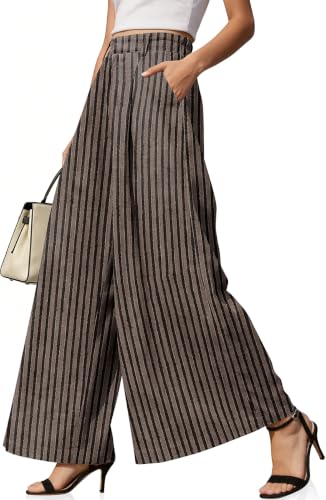
Lower-priced high-waist linen palazzo title provides another plain trouser direction to investigate.
Check the selected garment beneath the kurti; no coverage guarantee is made.
View on AmazonBest Premium

Higher-priced black chiffon palazzo dress pants offer an optional occasion-separate example.
Not a traditional-garment claim or a required kurti pairing; lining must be checked.
View on AmazonThese are editorial shopping starting points based on listed details, not hands-on tests. Budget and Premium describe relative asking-price tiers among the featured options when researched; they do not establish product quality. Confirm the selected size, composition and current price on Amazon. How we choose examples.
Put the top on before selecting the trousers. Notice where its hem falls on you, how wide it is at the lower edge, and whether its side openings change the view of the pants. These are garment relationships, not fixed rules tied to height. Two tops labeled the same length can fall differently because of shoulder shape, cut, and your own proportions.
Contemporary retailer Fabindia suggests pairing front-slit or asymmetrical kurtis with palazzo pants. That is a useful current styling example from an Indian clothing retailer. It does not establish that every kurta or kurti must be worn with the same type of trousers, or that one combination represents every regional practice.
Retailers also use kurta and kurti labels in overlapping ways. When shopping, pay attention to the actual length, silhouette, and measurements instead of relying on the label to predict the garment. Here, the focus is the top-and-palazzo relationship rather than a rigid terminology distinction.
With a shorter top, more of the waist and upper leg is visible. This gives a decorative waistband, pleats, or a printed trouser more space in the outfit. Check whether the top meets the waist where you want it when standing and when reaching. You can choose a little overlap, a longer hem, or another arrangement according to your preference.
A knee-length or longer straight top can make the pants visible primarily below the hem and through side slits. The result may feel quieter at the waist and more fluid lower down. If the trousers have a print or border you want to show, make sure enough of it remains visible to justify the combination.
A longer flared top plus very broad trousers creates generous movement in both pieces. That can be exactly the effect you want. Try walking and sitting to check whether the amount of fabric feels comfortable, and compare a less sweeping palazzo if you prefer a calmer outline. No general rule requires pairing a full top only with narrow bottoms.
| Top shape | Possible palazzo direction | Check on the body |
|---|---|---|
| Short, straight kurti | Visible high waist or a smooth upper trouser | Where the two hems meet during movement |
| Long, straight top with side slits | Fluid legs visible beneath and at the sides | Coverage and pattern placement through openings |
| Flared kurti | Plain palazzo with a width you enjoy | Combined volume while seated |
| Heavily detailed top | A quieter trouser surface | Whether detail catches on the lower layer |
| Plain top | Printed or textured palazzo as the feature | How much of the trouser detail remains visible |
Length describes where a piece ends; volume describes how much fabric moves around you. Change one at a time when an outfit feels unresolved. A shorter but very full top can create more movement than a long narrow one.
Side slits can reveal a different part of the trousers when you walk, turn, or sit. Put on the intended undergarments and examine the outfit from the side. Check where the opening begins relative to the waistband and whether the trousers provide the coverage you want through it.
Carry your bag during the check. A strap may lift or gather the top, changing the visible area. If that matters to you, adjust the bag position, choose a different layer, or select another trouser rise. Do not assume that a long front hem guarantees the same coverage from every angle.
If you like the way a printed palazzo appears through the slits, use that as an intentional detail. A repeated color from the kurti can tie the glimpse to the rest of the outfit. There is no need for the entire print to be visible for the relationship to work.
Take one color from the top and repeat it in the trousers. This is a straightforward way to connect separately purchased pieces, particularly with a printed kurti. For a softer combination, choose a lower-contrast color from the pattern. For a stronger one, repeat a darker outline or accent.
Another option is tonal dressing: use related shades rather than an exact match. Compare the pieces in the same light so a warm cream and cool white do not surprise you. An obvious contrast can look more deliberate than two almost-matching shades that you hoped were identical.
The TARSE black linen wide-leg palazzo trousers are a simple title-supported base for a kurti with a black detail or a deliberate contrasting palette. The title identifies linen styling but does not verify fiber percentages. Check the actual waistband and coverage beneath your top rather than transferring details from another TARSE model.
If the kurti carries the main print, plain pants let its colors and placement remain clear. If the top is plain, a printed palazzo can introduce movement and pattern at the lower half. Both are easy starting points because each gives one garment a distinct role.
The Lepunuo geometric-print high-waist palazzo pants offer a printed comparison for a plain kurti. Their title establishes the geometric direction and a long palazzo style. Look at the selected print before choosing the top color, and check whether a longer top leaves the amount of pattern visible that you want.
You can mix prints, but judge the actual combination instead of following a supposed universal rule. Try a shared color with different motif sizes, or a quieter pattern alongside a more prominent one. If the outfit feels busy to you, simplify one piece rather than adding another patterned accessory to force a connection.
A dupatta may be central to the outfit you want, optional for your personal styling, or relevant to the specific occasion. Decide that based on your preferences and event context. It should not be treated as a compulsory accessory for every kurti-palazzo combination.
If wearing one, try its color and detail against both the top and trousers. It can repeat a pant color, bridge two contrasting shades, or carry the main decorative detail over plain clothing. Check where its ends fall relative to the kurti hem and whether the arrangement stays comfortable while you walk.
Use your familiar method of arranging or securing it. Test the outfit with the bag and jewelry you plan to wear, because hardware can catch fine fabric or shift a drape. If you expect to eat, carry items, or move frequently, choose an arrangement that leaves you the freedom you need.
Juttis, flats, sandals, and heels are possible styling choices depending on your preferences and the setting. No single shoe is required by the palazzo silhouette. Choose the actual pair you want to wear, then look at how the trouser opening moves over it.
If the trousers cover much of the shoe, a visible toe or embellished edge can still contribute to the outfit. Make sure the hem does not catch beneath the heel or brush the floor continuously. For an event involving substantial walking or standing, rehearse the combination long enough to know whether it feels usable.
Do not change to a much taller shoe solely because the pants are too long unless you genuinely want to wear that shoe. Arrange the length or compare another garment. The length guide explains the hem decision separately.
For a more dressed-up occasion, you can connect an embellished kurti with a quiet flowing trouser and one related accessory. Or choose a plain top with an interesting trouser surface and a dupatta that ties their colors together. The level of dress should suit the particular invitation rather than an assumed standard for all celebrations.
The Alex Evenings black chiffon palazzo dress pant is an optional higher-priced example for comparing a fluid occasion trouser under a dressier top. It is not presented as a traditional garment or a required partner for a kurti. Check lining, inseam, and waist construction on the exact listing before using it in a layered outfit.
Sit, raise your arms, reach into your bag, and walk around a chair. Watch the kurti slits, the trouser waist, and any dupatta at the same time. An outfit can feel secure while each piece is considered separately yet need adjustment when all the layers move together.
If something feels awkward, name the issue precisely: too much fabric at the knee, an opening revealing more than you want, a scarf end catching the bag, or a hem dragging. Solve that particular relationship. This produces a more useful result than deciding that your proportions cannot wear the combination.
Yes, if you like the combined volume and can move comfortably in it. Check how much trouser is visible below the top and through any slits. A straight long top and a flared long top create different effects, so assess the actual pieces rather than length alone.
That depends on your preference, the outfit, and the specific occasion. A dupatta can connect colors or add detail, but it is not treated here as a universal requirement. If an event has particular expectations, ask about those directly and plan the ensemble accordingly.
They can when the colors and detail feel coherent to you. Try the actual garments together and see whether the print competes with embroidery or supports it. If the result feels busy, plain trousers are an easy alternative; there is no obligation to add more accessories.
Look at the outfit from the side while walking, sitting, and carrying your bag. Confirm that the trouser rise and underlayers give you the coverage you want through the openings. A long front panel alone does not establish side coverage in motion.
Style a kurti with palazzo pants by treating length, volume, and visible detail as choices you can adjust. Begin with the top, decide how much trouser you want to reveal, and connect the pieces through color or a purposeful contrast. Add a dupatta and footwear according to your preferences and the occasion, then test the whole outfit in motion. Contemporary retailer examples can offer ideas, but they do not define a universal cultural rule. The strongest combination is the one whose layers, openings, and movement feel considered on you and appropriate for the setting you have chosen.