Best Overall
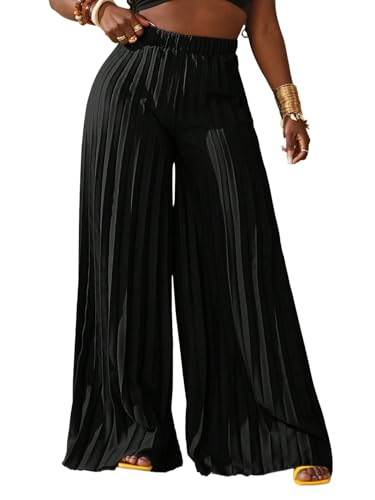
QJQ Pleated elastic waist palazzo trousers
Pleated wide-leg palazzo title with an elastic high waist makes a relevant care-comparison example.
Pleat manufacturing method and laundering instructions remain unverified.
View on AmazonCare
A pair with two broad folds at the waist and a pair covered in fine accordion pleats may both be sold as pleated palazzo pants. Their care problems are not necessarily the same. One may need an existing crease aligned during pressing; the other may explicitly prohibit the heat you would use to do that.
The first task is to identify what the pleats are doing and what the maker allows. Preserve the intended folds while cleaning the garment, and keep accidental wrinkles separate from the texture that belongs to the design.
As an Amazon Associate I earn from qualifying purchases. Purchases take place on Amazon.
Best Overall
Pleated wide-leg palazzo title with an elastic high waist makes a relevant care-comparison example.
Pleat manufacturing method and laundering instructions remain unverified.
View on AmazonBest Budget

Lower-priced WB1484 pleated drawstring model is a clearly named alternative to inspect.
Do not infer permanent pleats or safe steaming from the title.
View on AmazonBest Premium

Higher-priced pleated plisse satin-described palazzo example offers another finish to investigate.
Silk and satin words in the title do not verify fiber percentages or heat tolerance.
View on AmazonThese are editorial shopping starting points based on listed details, not hands-on tests. Budget and Premium describe relative asking-price tiers among the featured options when researched; they do not establish product quality. Confirm the selected size, composition and current price on Amazon. How we choose examples.
Place the dry garment on a clean surface and let it settle without pulling it wide. Count where the folds begin and end. Some are sewn down near the waistband and release into the leg; others repeat across the fabric from top to bottom. An ironed center crease is another feature again. Use the existing garment as your reference instead of forcing every fold into a diagram for a different design.
Take a few photographs before the first cleaning: the front, the back, the waistband and a close view of the hem. Include a relaxed view of the pleats rather than only a picture of them spread apart. These images will help you explain a later change and guide the arrangement after a permitted wash.
Look for a separate instruction attached to the garment, in its packaging or on the exact maker page. A care tag may have additional words beyond the symbols. Keep those details together so a future cleaner does not receive only half of the instructions.
| Feature | Question to answer | What not to assume |
|---|---|---|
| Waist pleats sewn into construction | How should the released fold hang after cleaning? | That every fold must be pressed to the hem |
| Tailored leg crease | Is pressing permitted, and where is the existing line? | That a second parallel crease improves it |
| All-over fine pleating | What specific wash, heat and storage limits apply? | That permanent appearance means heat-proof |
The distinction helps you describe the garment to a professional. “Fine pleats throughout both legs” gives more information than “dress pants.” If different parts of the garment use different finishes, mention that too. A smooth waistband over pleated legs may allow handling of one part that is inappropriate for another.
Do not try to identify the pleating process solely by fiber content. Knowing that a garment contains polyester, rayon or a blend does not reveal every manufacturing step. Where the process matters to care, request the maker's guidance rather than guessing from how springy the pleats feel in your hands.
ISSEY MIYAKE's instructions for its named pleated lines permit specified washing while prohibiting ironing, steaming and tumble drying; they also caution against certain pressure and softener treatments. These are brand-specific instructions, not a method for every pleated pant. They demonstrate why the advice “steam all pleats back into place” is unreliable.
Your pants may have a different label and require professional cleaning or permitted pressing. Follow that garment's complete directions. The word pleated is a description of appearance, not a standardized promise about home laundering. Do not borrow a convenient instruction from an expensive designer garment and assume a visually similar marketplace pair shares its construction.
If the tag and the exact product page disagree, ask for clarification before treating the garment. Save photographs of both. A customer-service reply that identifies the precise style and color is more useful than a generic answer about the brand's pants category.
Before any permitted wash, empty pockets and inspect the folds for caught debris or loose threads. Close or secure details as the garment requires so they do not snag the pleats. If a laundry net is specified, choose a suitable size and arrange the pants inside rather than stuffing them into a compact ball. A net contains the garment; it does not cancel a care restriction.
Use the listed detergent and additive limits. Read the detergent bottle as well as the fabric-softener bottle, because combined products can contain an additive you intended to avoid. Do not pour an experimental mixture directly onto a pleated panel. A new stain or change in texture can be more difficult to assess when it crosses many small folds.
Set aside time to remove and arrange the pants when the wash ends. A busy morning may be a poor moment to start a process requiring attentive drying. If cleaning is professional, tell the cleaner that preserving the existing pleats is a priority and provide the maker's special instructions rather than assuming the general trouser service covers them.
Follow the garment's stated drying position. When arranging the fabric, let the pleats fall in their established direction rather than pulling them apart to expose more surface. Support the garment as needed for transfer, and avoid leaving a heavy wet section suspended from an unsupported fold.
Check that the waistband and pocket layers are not trapped in a tight bundle. Those thicker areas can require attention even when the visible front seems dry. Keep the pants away from other items that press across the folds. Do not drape a heavy towel over them in an attempt to flatten a wrinkle; it could change the very shape you are trying to preserve.
Assess the final arrangement only when dry. If some pleats seem wider or less regular, compare with the reference photographs. A photo taken while the pants were stretched on a hanger is not a reliable model of their relaxed form, which is why the original unstretched reference matters.
If pressing is allowed for a tailored pleat, locate the existing fold carefully before bringing the iron to the fabric. Work with a supported section and check both the upper and lower layers. A pleat can look aligned from above while a pocket bag or seam allowance forms a ridge beneath it.
For a small number of construction pleats, preserve the original direction and stopping point. Do not extend a fold all the way to the hem unless the design calls for it. That would change the presentation of the pants, not simply restore them after washing. Keep any permitted heat and pressure within the label's limits.
When the garment says no iron or no steam, follow that restriction even if one fold is annoying. A protective cloth does not transform a prohibited heat process into an approved one. Ask the manufacturer or a cleaner experienced with the exact type of garment whether any correction is possible. A natural-looking result with a small irregularity can be preferable to a flattened panel.
Check whether the maker recommends hanging, folding or rolling. Give a specially pleated garment its own space so other clothes cannot pull it sideways or compress it unevenly. If you fold it, use the approved direction and avoid turning it into an overly tight package to fit a crowded drawer.
Think about retrieval as part of storage. A pair at the bottom of a heavy stack may be compressed for weeks, then yanked out by the waistband. A suitable shallow stack or dedicated compartment can make careful handling easier. Keep accessories with hard edges separate from fine pleats rather than resting a belt buckle on the visible front.
For trips, use the packing guide to plan space and arrival access. For everyday cupboard arrangements, see hanging and storage. Neither situation creates permission to ignore a particular pleated garment's directions.
Stop additional treatment and photograph the affected area. Record whether the change followed washing, prolonged pressure, heat or another event, without pretending you can identify the cause from appearance alone. Keep the rest of the garment in a relaxed, supported arrangement while seeking advice.
Ask whether the maker offers assessment or recommends a specialist. Do not assume a dry cleaner can recreate a manufacturing finish, or that every crease can be restored with a household iron. Describe the result you would accept: improved uniformity, a repaired local section or simply a decision about whether the garment remains wearable.
When replacing a pair, inspect specific pleat claims. The Made By Johnny WB1484 is titled as pleated with a drawstring, while the QJQ flowy pleated palazzo explicitly names a high elastic waist. These are useful shopping distinctions, but the titles do not verify permanent pleating or identical wash instructions. The pleated collection is a starting point for comparison, not a shared care label.
Do not assume so. Some makers explicitly prohibit steam on their pleated garments. Identify the exact instructions and ask about damage assessment before trying to reconstruct a finish with household heat.
Only when the original design and permitted finishing method call for that. A pleat sewn near the waist may be intended to release into flowing fabric. Extending it changes the appearance rather than simply maintaining it.
No. A bag can be part of an allowed washing process, but it does not override a professional-cleaning or no-wash instruction. Read the complete garment label before deciding where the bag belongs.
Explain where the folds changed, whether the finish is all-over or localized, and what care or pressure preceded the change. Bring the label and reference photographs. Ask what improvement is plausible without demanding guaranteed reconstruction.
Pleated palazzo care is most successful when the intended folds remain the reference throughout cleaning, drying and storage. Identify the design, photograph it relaxed and follow instructions for that exact garment. Keep a few tailored waist pleats separate in your thinking from an all-over pleated finish, especially when deciding whether to apply heat. If the shape changes, gather the evidence and seek informed advice before trying a second treatment. For future purchases, ask how the pleats should be maintained as well as how they look. A beautiful finish is easier to enjoy when its care requirements fit the routine you can actually provide.