Best Overall
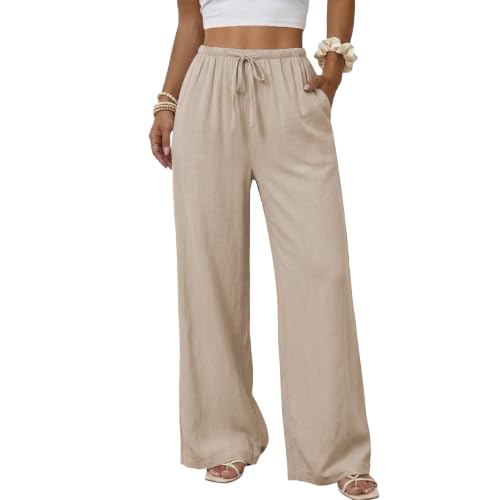
Duyang Cotton-linen drawstring palazzo pants
A cotton-linen titled drawstring model to inspect when comparing everyday construction and care.
No wash method is assigned from the title; follow its actual label.
View on AmazonCare
Before putting linen palazzo pants in the wash, read the instructions inside that pair. Linen in the title does not tell you the complete composition, and a familiar brand can sell several different fabrics. The waistband, lining and finish may matter as much as the main cloth.
A useful laundry routine begins with those facts, then organizes the practical work around them. This guide focuses on normal cleaning and drying. It does not prescribe one wash temperature for every linen garment or promise to reverse shrinkage after an unsuitable treatment.
As an Amazon Associate I earn from qualifying purchases. Purchases take place on Amazon.
Best Overall
A cotton-linen titled drawstring model to inspect when comparing everyday construction and care.
No wash method is assigned from the title; follow its actual label.
View on AmazonBest Budget

A lower-priced TARSE linen-titled casual option for a care-conscious shortlist.
Composition and laundry requirements are not established by the catalog title.
View on AmazonBest Premium

A higher-priced GRACE KARIN linen-titled alternative for comparing care before purchase.
A premium price tier does not guarantee easier washing or less shrinkage.
View on AmazonThese are editorial shopping starting points based on listed details, not hands-on tests. Budget and Premium describe relative asking-price tiers among the featured options when researched; they do not establish product quality. Confirm the selected size, composition and current price on Amazon. How we choose examples.
Look for washing, bleaching, drying, ironing and professional-cleaning information. Read all wording rather than stopping at machine washable. A garment may allow machine washing while prohibiting tumble drying, or permit a limited ironing treatment. Photograph the label if the print is small or likely to fade.
GINETEX explains that care instructions account for the complete article, including finishes and accessories. That is why a general linen routine cannot override the label on a lined or decorated pair. If an instruction is unclear, resolve it before adding water or detergent; an uncertain care symbol is a question, not permission to choose the most convenient cycle.
Check the composition entry separately from the care instructions. A linen blend may contain cotton, viscose or another fiber, and the title may emphasize linen without giving its proportion. Keep the selected garment's information together so you do not accidentally follow advice for a different model.
The Faleave cotton-linen palazzo listing and Duyang cotton-linen drawstring listing both name a blend in their titles. Those names make them relevant shopping examples, but they do not supply percentages or authorize a wash method. For either pair, the actual label must decide the cleaning routine.
Some garments need professional care, while others specifically prohibit a particular process. For example, the maker's page for the EILEEN FISHER organic linen wide-leg pant lists cold machine washing, line drying and no dry cleaning. That instruction belongs to that style only.
If your pants are labeled dry-clean only, discuss them with a cleaner rather than substituting a home soak. If the label prohibits dry cleaning, show that restriction to the cleaner too. A professional can help interpret the garment and available methods, but the phrase take it to a cleaner should not be used to erase the manufacturer's directions.
| What the label or garment shows | Next action | Avoid assuming |
|---|---|---|
| Machine wash allowed | Use the permitted cycle and conditions | Every drying method is also allowed |
| Hand wash specified | Prepare a suitable basin and drying area | A machine delicate cycle is identical |
| Professional cleaning required | Consult a cleaner with the label visible | A short soak is harmless |
| Missing instructions | Contact the maker or seek professional advice | Fiber name supplies a complete routine |
| Damaged seam or trim | Address the damage before routine washing | Cleaning will improve the defect |
Empty every pocket, including small inner compartments if present. Check for tissues, receipts, loose coins and items that could mark the fabric. Look at the hem for soil and inspect seams for an opening that might grow during handling. A quick inspection is especially useful on wide pants whose hems may brush against furniture or outdoor surfaces.
Follow any label instructions about fastening closures or turning the garment inside out. If the pants have a drawstring, ensure it is secure enough not to disappear into its channel. Do not tie a knot so tight that it becomes difficult to release. Remove only accessories designed to be removable, and keep them with the garment so they are not misplaced.
Identify the mark if you can: food, makeup, oil, soil or an unknown substance. Tell a professional cleaner what happened and whether you have already applied anything. Avoid layering several stain removers in the hope that one will work. Read the treatment product's directions and the garment label together, including any restriction on bleaching.
Test an allowed product in an inconspicuous area when its instructions call for it. Do not rub aggressively at a delicate surface or assume a natural-fiber label makes every household cleaner suitable. If the stain is difficult, valuable to remove or close to a sensitive trim, professional advice can be more useful than repeated home experiments.
For machine washing, select the conditions allowed by the garment rather than choosing a cycle by its appealing name. Machine settings differ, so consult the appliance instructions when a label requirement is unclear. Avoid cramming long, wide trouser legs into an already crowded load. The pants need room for the selected process to work as intended.
For hand washing, use a clean basin with enough space to handle the pants without compressing them into a small bundle. Prepare the rinsing and drying setup before starting. Follow the specified detergent directions; using more than recommended is not a substitute for a suitable method. Keep the routine simple enough that you can repeat it consistently.
The Alliance for European Flax-Linen & Hemp recommends gentle treatment and label checks in its linen-care guidance. That is helpful background, but it should not be converted into one mandatory temperature for every trouser. The same guidance recognizes that garment components can change care requirements.
Choose a milder permitted approach when appropriate, but do not assume that an arbitrarily shortened process will remove every stain. Cleaning and fabric preservation both matter. If a normal allowed wash does not solve a mark, reassess the stain instead of repeatedly escalating temperature, agitation or chemicals without evidence that the garment can tolerate them.
Support the pants when transferring them so one small point does not carry the entire wet garment. Keep the legs from dragging across an unclean surface. For hand washing, use the label's directions for removing excess water rather than twisting the legs tightly as an improvised shortcut.
Check that the garment is not tangled before drying. Separate the legs, align the waistband gently and smooth obvious bunching without pulling the fabric into a new shape. This is ordinary positioning, not a shrinkage-recovery technique. If the pants appear distorted, stop and inspect the seams and dimensions rather than stretching harder while the cloth is wet.
Read the drying instruction as its own requirement. Machine-washable does not mean tumble-dryable. If line drying is allowed, arrange enough clean space so the pants are not folded into a dense bundle. If flat drying is specified, use a suitable supported surface and allow air to circulate around the garment.
If tumble drying is permitted, use only the stated conditions and check the result rather than leaving the pants through unrelated additional cycles. Do not use extra heat because a garment is needed quickly. Plan laundry around the time the permitted method takes. If that schedule is consistently impractical, the care requirement should influence your next purchase.
Once the pants are dry, inspect the stain area, seams, waistband and hem before putting them away. Check that no small item remains in a pocket and that the garment is completely dry before folding into storage. If the pants need pressing, consult their finishing instructions and our linen pressing guide.
If the dimensions seem different, compare them with previous measurements taken in the same way. Do not judge shrinkage solely by how the pants look while wrinkled. Our shrinkage guide explains how to distinguish fit change, creasing and construction problems before considering recovery options.
Keep a short garment note with composition, allowed care and any treatment that needs special attention. You do not need a complicated laundry database; a label photograph and a few words can prevent confusion among similar-looking pairs. This is particularly useful when several household members wash clothing.
When shopping again, compare care as a product feature. A linen-style selection can include garments with very different requirements. Prefer the model whose actual instructions fit your routine, and resist assuming that a more expensive pair must be easier to wash or that every relaxed silhouette belongs in the same laundry load.
Only when the care label permits it, using the stated conditions. The presence of linen does not supply that permission by itself. Lining, finish and other components can change the allowed method, so read the exact garment's instructions.
No. Some garments specifically prohibit dry cleaning. Show the care label to a professional when seeking advice. Do not replace an approved washing method with a different process simply because the fabric sounds delicate or valuable.
Follow the blend garment's own label. The other fibers and construction may affect what is allowed. A product title that says cotton-linen or linen blend does not establish percentages, temperature, cycle or drying method.
Look for the exact model's manufacturer instructions and contact the seller if necessary. A clear photograph of the garment and remaining tags can help. If reliable guidance is unavailable, consult a professional cleaner before experimenting with a valuable or delicate pair.
A reliable linen-palazzo laundry routine starts with the exact garment and keeps washing, drying and finishing decisions separate. Read the label, inspect the pants, choose the permitted method and prepare the drying space before you begin. Treat stains deliberately and avoid escalating heat or chemicals when a result is uncertain. The name linen is useful composition information, but it cannot replace garment-specific instructions. Save those instructions for the next wash, and let their practicality inform future shopping. Clean pants that retain a comfortable fit are a better goal than following a one-size-fits-all fabric rule.