Best Overall
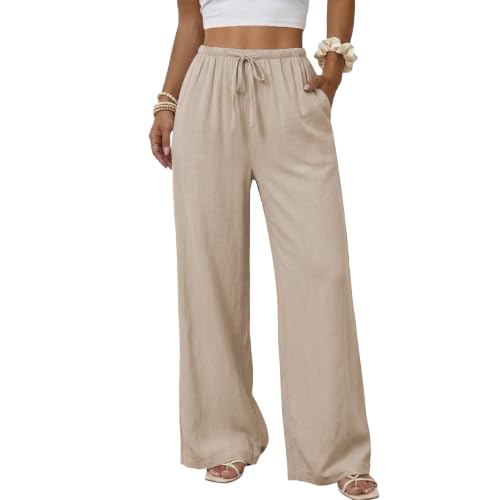
Duyang Cotton-linen drawstring palazzo pants
A drawstring cotton-linen titled example for evaluating waistband construction and finishing requirements.
The actual garment label must establish permitted heat and steam.
View on AmazonCare
Linen palazzo pants do not have to be pressed into a perfectly flat sheet to look cared for. You may want only to release packing folds, smooth the waistband or restore a cleaner line through the legs. Decide on that finish before turning up the heat to chase every natural crease.
The garment's label comes before the word linen on an iron dial. Blends, lining, elastic and surface treatments can impose different limits. A useful pressing session combines the permitted treatment with a controlled setup, a small test and a plan for handling the wide fabric without making new folds.
As an Amazon Associate I earn from qualifying purchases. Purchases take place on Amazon.
Best Overall
A drawstring cotton-linen titled example for evaluating waistband construction and finishing requirements.
The actual garment label must establish permitted heat and steam.
View on AmazonBest Budget

A lower-priced TARSE linen-titled casual option for comparing relaxed maintenance needs.
No easy-iron or crease-resistance claim is verified.
View on AmazonBest Premium

A higher-priced GRACE KARIN linen-titled alternative for a deliberate style and care comparison.
Higher price does not establish a better pressing result or simpler care.
View on AmazonThese are editorial shopping starting points based on listed details, not hands-on tests. Budget and Premium describe relative asking-price tiers among the featured options when researched; they do not establish product quality. Confirm the selected size, composition and current price on Amazon. How we choose examples.
Start by identifying the problem: a packing fold, a wrinkled seat, a folded waistband or an intentionally pressed leg line that needs attention. Those do not all require the same degree of pressing. A relaxed linen pair may look right with some texture remaining, while a more structured trouser may suit a clearer finish.
Inspect the pants on a hanger before doing anything. Decide which areas are visible and whether the marks are ordinary folds or possible damage. A stain, shine mark or puckered seam will not necessarily improve with more ironing. If you are uncertain, stop and investigate rather than treating every irregularity as something heat should remove.
Check the ironing instruction, any steam restriction and the garment's full composition. GINETEX explains that care symbols indicate permitted treatment for the article. Do not interpret a generic fiber setting as permission to exceed the label's limit.
A concrete example is Long Tall Sally's linen-titled tie-waist trouser, which lists a viscose-linen blend and low-heat ironing. It demonstrates why the word linen does not automatically justify a high setting. The instruction is specific to that garment, not a setting to transfer to every linen blend.
Pressing uses an iron against a supported area, while steaming can relax some folds without the same contact, depending on the garment and equipment. Choose the method the care instructions allow and the finish you need. A steamer is not automatically harmless because it avoids a flat soleplate.
For a sharper waistband or an existing trouser crease, controlled pressing may be the relevant method if allowed. For a relaxed finish and light handling folds, permitted steaming may be enough. Read your appliance manual for filling, distance, attachments and safe operation. The exact device instructions matter more than a universal distance or number of steam passes.
| Area or issue | Useful approach if permitted | What to watch |
|---|---|---|
| Broad packing fold | Work across a supported section | Do not drag the fabric off grain |
| Waistband | Handle short sections around construction | Elastic, drawstrings and closures |
| Pocket area | Arrange pocket bags before pressing | Imprinted edges or trapped folds |
| Existing leg crease | Align the original line carefully | A second accidental crease |
| Unexplained shine or mark | Stop and assess | Extra heat may worsen damage |
Check that the ironing surface and any pressing cloth are clean. Inspect the iron or steamer according to its manual, especially if it has been stored for a while. Test for drips or residue away from the garment. Keep the cord positioned so it cannot catch the long trouser legs while you move them.
Arrange a place to hang or support the finished pants before you start. A wide garment can gather new folds if the completed leg is dropped onto a chair while you work on the other. Give yourself enough space to move the fabric deliberately. Never steam a garment on your body or direct steam toward your hands beneath the cloth.
The Alliance for European Flax-Linen & Hemp suggests pressing suitable linen while slightly damp and working from the reverse. Apply that advice only within the actual garment's care restrictions. A blend, finish or trim can require a different approach.
If the pants are already dry, do not saturate them simply because a crease is stubborn. Follow the permitted method and appliance guidance. Uneven wetting can make it harder to judge the surface while you work. If you need to launder the pants first, use the washing guide and keep cleaning separate from the finishing task.
Choose a small inconspicuous area appropriate to the garment and use the lowest effective setting within the label's allowance. Let the area cool and inspect it. Look for changes in sheen, texture, color or shape before moving to a large visible panel. A test does not remove all risk, but it can reveal a problem before it affects the front of the trousers.
Use a clean pressing cloth when suitable, recognizing that it is not permission to exceed the heat limit. Avoid pressing directly over decorations or components unless the maker allows it. If you see a change you do not like, stop. More pressure or a hotter setting is not a reliable way to reverse an unexpected surface effect.
Begin with an area you can control easily. Arrange the waistband so it lies naturally without stretching the elastic. Work in short sections and avoid flattening gathered areas into a shape they were not designed to hold. Keep a drawstring and its ends away from unnecessary direct contact with the hot tool.
Check pocket bags before pressing the upper legs. A folded bag underneath can create an unwanted ridge or make the surface look uneven. Support the area so seams and closures are not forced into the face of the fabric. If the design includes intentional pleats, preserve their original arrangement rather than ironing them open accidentally.
Lay one leg on the board without twisting it. Align the seams according to the garment's design and work in sections that fit the surface. Lift and reposition the fabric instead of pulling a long unsupported section while the iron rests on it. Keep the already finished area clear so it does not fold beneath the next section.
Do not invent a sharp center crease unless that is the finish you want and the garment supports it. For an existing crease, align the original line carefully before pressing so you do not create a second parallel line. If the pants have a deliberately fluid, uncreased leg, aim to release disruptive folds while retaining that relaxed character.
The Duyang cotton-linen drawstring palazzo listing describes a waistband and blend category, but it does not establish an ironing temperature. The Faleave cotton-linen palazzo listing similarly supplies useful style information without a complete finishing instruction in its observed title.
For either model, inspect the actual care label before using steam or heat. Do not borrow directions from another cotton-linen garment. These examples are optional shopping references for someone comparing maintenance needs, not claims that the pants have been pressed or tested by this publication.
After treating a section, give it time to cool and dry as appropriate before handling it extensively. Hang or support the pants without compressing the finished areas into a bundle. Check the overall hang once both legs are done, then address only remaining obvious folds within the permitted treatment.
If the pants are still damp, do not put them into crowded storage. A rushed final fold can undo much of the work. Plan the session early enough that you can finish calmly, especially before travel or an event. The storage guide offers options for keeping long, wide garments organized between wears.
If repeated permitted passes do not improve a mark, reassess it. It may be a seam problem, a previous fold impression, a finish change or a stain. Continuing with more heat can turn an uncertain issue into damage. Ask the maker or a professional cleaner when the pants are valuable or the surface has changed unexpectedly.
A realistic finish does not require eliminating every sign that linen has been worn. Choose the level of neatness that suits the garment, maintain it within its label and accept that ordinary movement will create new folds. The useful outcome is a clean, comfortable pair with an intentional appearance, not a fabric forced into permanent smoothness.
Only if it is compatible with the garment's label. A linen-titled pair may be a blend with a lower permitted heat level. The appliance setting is not a substitute for the instructions on the pants, and a pressing cloth does not authorize extra heat.
No. Steam still introduces heat and moisture, and some garments restrict it. Follow both the garment label and the appliance manual. Choose a method for the finish you need rather than assuming that a lack of direct soleplate contact removes every risk.
That depends on the design and your preferred finish. Preserve an existing crease carefully if you want it, but do not add one automatically to fluid, uncreased pants. Align the original construction so you do not produce an unintended second line.
Stop using heat on that area and let it cool before assessing the change. Do not assume more steam or pressure will reverse it. Seek garment-specific advice from the maker or a professional cleaner, especially if the surface has visibly altered.
Press linen palazzo pants to the finish you want, using the treatment the actual garment permits. Separate fiber naming from heat settings, test a discreet area and handle the waistband, pockets and wide legs deliberately. Steam can be useful when allowed, but it is not a universal low-risk alternative to an iron. Let finished sections settle and stop when a mark does not behave like an ordinary crease. A few natural folds can belong to the look of the pants; preserving the fabric and a comfortable fit matters more than forcing every surface perfectly flat.